Posted on 2 Comments

WordPress 3.1 Arrives

It’s been a long time coming, but WordPress 3.1 is officially released! Code named “Reinhard” after jazz great* Django Reinhard, WordPress 3.1 includes some great new functionality.

A few key highlights:

  • Easier to add internal links in a post or page with a killer lookup.
  • An amazing new post formats feature that allows theme developers to present several different kinds of posts in their own unique style. The formats have been standardized, with eleven available formats. Theme developers can choose to make these available or not, but to help ensure compatibility between themes, they cannot introduce new formats (unlike post types).
  • Sortable columns in the admin screens make it easier for any site with more that 20 posts or pages to filter and find the content they need to edit.
  • And the new Admin Bar — which you either love or hate — gives you quick access to key admin activities right from your site.

I’ve already updated my sites to 3.1 — a relatively painless task when your themes are coded properly — and recommend you do so on yours. Keeping your WordPress installation and plugins updated helps make your site less vulnerable to hackers.

I’m still familiarizing myself with the new functionality in 3.1, but there are already some great overviews if you want to learn more.

Have you updated your WordPress site? Read up and dive in!

*All WordPress releases have had code names based on jazz musicians. Matt Mullenweg may not be a poet, but he loves jazz music.

Posted on 6 Comments

Social Media and Knowledge Management

Social media is often cast as being at odds with enterprise initiatives such as knowledge management. There is a sense that as people embrace and use social media tools like Twitter, Yammer, LinkedIn and Quora, the enterprise loses control over their knowledge. While this is certainly true, it’s also nothing new. There have always been and always will be opportunities and reasons to search the Internet vs searching the Intranet; for participating in an Internet discussion group vs. one in your enterprise community; and for leveraging external wisdom vs. known internal resources.

The subject of this week’s KMers.org tweet chat emphasized this tension: Corporate Social Media vs. Intranets. The implication is that social media and knowledge management are at odds and one is destined to be the solitary victor.

Reality Check.

Social media and knowledge management aren’t at odds at all. In fact, the most successful knowledge management systems embrace social media, but with a business mindset. The smart KM implementations leverage blogs, subscriptions, communities, discussion forums, and member profiles. They tie it together with search in a single working environment. And they look for opportunities to tie in other tools to streamline knowledge sharing — everything from instant messaging (i.e. Sametime) to micro-blogging (i.e. Yammer).

A few of the comments that really stuck out in our discussion today bear this out. We were asked for tips on optimizing the integration between social media applications and intranets. Here are a few notable responses:

[blackbirdpie url=”http://twitter.com/#!/TKBeard/status/40101729278246912″]

Tammy Bearden hits the nail on the head: it all starts with people.

[blackbirdpie url=”http://twitter.com/#!/stangarfield/status/40103103382429696″]

I like Stan Garfield’s advice to meet people where they are, which for many is still the email inbox.I’ve found the ability to subscribe and get email notifications to be an invaluable tool for engaging the workforce. I would even say it’s essential, and we’ve found it to be a tremendous attraction at Fluor.

[blackbirdpie url=”http://twitter.com/#!/BarbaraFillip/status/40102879041687552″]

Barbara Fillip reminds us to take the member eye view. Remove barriers to participation, where possible. Single sign-on is just one example.

Thanks to Stan Garfield, Liz Williams, Tom Menke, Ryan McCleadSean Brady, Tammy Bearden, Antoon van het Erve,  Matthew Loxton, Barbara Fillip, and the other participants who shared their knowledge and insight. You can read the entire tweet chat transcript online, as well as check the schedule of upcoming discussions on KMers.org. We gather via Twitter every Tuesday at noon Eastern time. If you’re a KM professional, you should be a part of the discussion.

Posted on 4 Comments

The Origin of Follow Friday

Follow Friday is a popular Twitter meme that has been around since early 2009. What is Follow Friday and how did it get started? And what makes a great Follow Friday tweet?

Follow Friday is a way for Twitter users to recommend other Twitter users to their followers. In essence, when you mention someone in a Follow Friday tweet, you’re saying to all of your followers, “You follow me and like my tweets, so you’ll probably also like the tweets from these people, too.”

How Follow Friday Began

Follow Friday can be traced back to this tweet from Micah Baldwin (@Michah) on January 16, 2009.

[blackbirdpie url=”http://twitter.com/micah/status/1124262248″]

The concept was simple enough. Suggest a person to follow using the #followfriday hash tag, and your followers should follow them.  Since then, #followfriday has been abbreviated to simply #ff.

If you’ve been active on Twitter for any length of time, you’ve likely seen yourself mentioned in a Follow Friday tweet. This is generally a good thing, because it means someone thought you were worthy of recommending that all of their followers also follow you.

The problem with many Follow Friday tweets is that they include very little context. Ideally, when you see one of these tweets, you should have some idea about why this person is worth following. In some cases, the person doing the recommendation may have a great reputation for only suggesting really good people to follow, and you can simply trust their recommendation.

Other times, the context is self-evident, as in this Follow Friday tweet:

[blackbirdpie url=”https://twitter.com/hikinglady/status/38630817538383872″]

It’s pretty clear from the name of the tweeter (@hikinglady) as well as at least one of her follow recommendations (@theSoCalHiker) that these recommendations probably have something to do with hiking. If you’re into hiking (which you probably are if you’re following @hikinglady) then you may well be interested in following these other hikers, too.

What about when you don’t know the tweeter well, and the context of the recommendation is unclear? Should you simply follow their recommendations? What is the proper etiquette for responding to a Follow Friday tweet?

Follow Friday Tweet Etiquette

There are two parts to Follow Friday tweet etiquette: what you do when you receive follow recommendations, and how you make your own #FF recommendations.

First of all, never simply follow everyone who gets suggested unless you have a high level of confidence in the person making the recommendations. Barring that, if it seems like an obvious fit (i.e. the hiking example above), you can make a judgement call. Most of the time, I will take a few moments and actually click to view the user’s twitter profile and recent tweets. I want to make sure their tweets seem to fit the subject and content I would be interested in. And I also ignore any users with the telltale signs of a twitter spammer.

When making your own Follow Friday recommendations, the best way to do it is by adding a little context. At today’s Social Media Masterminds of Orange County  — better known simply as SMMOCKirsten Wright (@kirstenwright) suggested that rather then sending a long list of names, send a tweet with just one name and a little context explaining why they are worth following.

[blackbirdpie url=”http://twitter.com/kirstenwright/status/39008698798051328″]

Fellow SMMOC-er Mel Aclaro (@melaclaro) took this concept one step further and suggested that rather than just posting a list of twitter names, write a blog post introducing you to these people and why they are worth following. You can tweet the Follow Friday announcement with a link to your blog. A great suggestion, and one that I’ll be using in the near future.

Creating a Follow Friday Tweet, Step-by-Step

  1. Is it Friday? If not, don’t use the #ff hash tag. It’s bad form. Save your Follow Friday tweets for Fridays. If you want, you could use a tweet scheduling service like CoTweet or

Other Twitter Memes

Memes come and go, but Mashable posted a partial list of Twitter memes for every day of the week.

As you grow more comfortable with Twitter, begin using the Follow Friday techniques to share your favorite people and reap the karma you’ve sown.


Posted on Leave a comment

Seth Godin Returns to Orange County

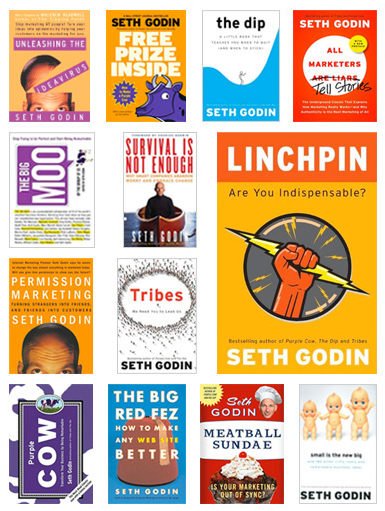
Seth Godin is coming to Orange County! Godin’s twelve books — all of them bestsellers — deal with the post-industrial revolution, the way ideas spread, marketing, quitting, leadership and most of all, changing everything. His blog is considered the most popular marketing blog in the world. And he’s coming to Orange County and you can hear him speak.

On March 2, Seth will be speaking at Renée and Henry Segerstrom Concert Hall. The event — organized by Bryan Elliot as part of Linked Orange County — is a great opportunity to hear from the innovative thought leader who usually is only seen at exclusive events like TED. Tickets are available now, and this is likely to sell out.

I’ve read several of his books, including The Big Moo, Small is the New Big, and Linchpin. He has a way of cutting through the crap and addressing your customer (be they internal or external) in a whole new way. Check out all of Seth Godin’s books (affiliate link).

What’s your take on Seth Godin? Let me know if you going on March 2, and I’ll make a point to say hello.

Posted on 12 Comments

Visualize Your Professional Network with InMaps

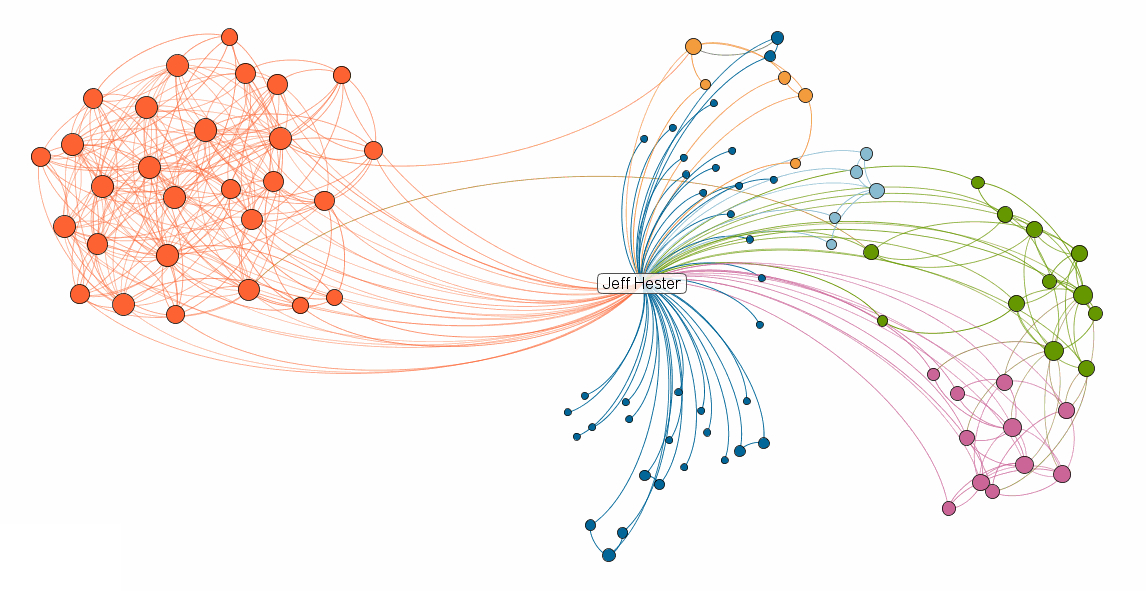
LinkedIn Labs has introduced InMaps – a visualization of your LinkedIn network. I first heard about InMaps via a Tweet from fellow #SMMOCer Mel Aclaro. LinkedIn wisely made sharing easy, and so a quick search will find plenty of fresh tweets about this as people discover the new feature.

I gave InMaps a quick spin and quickly discovered LinkedIn’s not-so-subtle ulterior motive: You can’t create a visualization unless you have at least 50 connections and your profile is at least 75% complete.

I’ll bet you a cold beverage that LinkedIn enjoys an sudden surge in both profile completion and network connections as a result.

For LinkedIn, it’s a brilliant move. By offering something sexy that people want (the groovy diagrams) but requiring them to step up and engage on a deeper level, the entire network wins. And (theoretically) they drive the behavior that they want from their community — people sharing deeper knowledge about their experience and connections.

How can we bring change to our community/organization/business/world? One small incentive at a time.

If you care, you can check out my visualization, create your own, or connect with me on LinkedIn.

Posted on 2 Comments

If I Were The Boss…

Knowledge management (KM) can help transform an organization as people begin to connect, leveraging the best knowledge and expertise to improve work processes and deliverables. Last week, I discussed what KM means on a personal level. In many ways, KM thinking is a mindset. The KM mind questions the value of everything, and challenges us to upend the status quo and discover innovative solutions.

One of the ways I sharpen my own KM mindset is through discussion and collaboration with other KM professionals and evangelists. Early today in one of those groups — KMers.org — we discussed how we would run things (from a KM mindset) “if I were the boss.”

Rob Swanwick moderated this tweet chat, seeding the conversation with three questions on “how we would run things (from a KM mindset)”:

  1. If I ran conferences…
  2. If I ran all meetings…
  3. If I controlled the direction for social media in my organization…

This led to a lively discussion with Rob Swanwick, Kate Bowers, Stan Garfield, Barbara Fillip, Liz Williams and others. While there were some excellent, practical tips for running conferences, meetings and managing social media, there was one key concept that particularly stuck out above all else:

THE REAL VALUE LIES IN RELATIONSHIPS

I used to get excited about what I would learn at a conference. It’s taken a few years, but now I understand that the real value isn’t in the content of any particular presentation or discussion, but in the relationships forged and strengthened. Recent research at IBM and MIT confirms this, even going so far as to put a dollar value on those connections. In their estimation, each contact is worth $948 in revenue.

Putting aside the absurdity of assigning a dollar value to a relationship, I suggest that the real value is much, much higher. And we understand this, intrinsically. During our tweet chat, I posed the following question to illustrate this point:

Which has more potential value? The chat transcript of any of these sessions, or the relationships built & strengthened?

While this in no way diminishes the value of the chat, discussion or presentation itself, it does drive home the point that what really matters is the connections. In knowing you, I am a better person. And vice versa. Together we are smarter, more productive, more interesting, more capable than we could ever be on our own. Our diverse perspectives and experience blend to create a wonderful collaborative stew.

If you’re interested in more, you can read the full tweet chat transcript, and continue the dialogue. If you are a KMer, please join is each Tuesday at noon Eastern time for our weekly tweet chat, hosted at KMers.org, and share your thoughts on the future of KM.

Posted on 1 Comment

What is Quora, and Why Should I Care?

If you haven’t heard of Quora, you should. It’s been getting a lot of buzz. What is Quora? According to their website, “Quora is a continually improving collection of questions and answers created, edited, and organized by everyone who uses it. Quora was founded in April 2009 by Adam D’Angelo, who was previously CTO and VP of engineering at Facebook, and Charlie Cheever, who led Facebook Connect and Facebook Platform. Quora is privately held and funded by Benchmark Capital, and is based in Palo Alto, CA.”

Having been involved in discussion forums, developing online communities such as BigBlueBall as well as enterprise communities in the context of knowledge management (KM), what’s interesting to me is how Quora takes the traditional threaded discussion format and completely reinvents it, with some excellent results.

Granted, there are important differences between Quora and a discussion forum. Quora is specifically and exclusively suited to a question and answer format. Forums can serve a much broader purpose, including open discussions, brainstorming and ad hoc, asynchronous collaboration. But when you look at most forums, a large percentage of the discussions begin with someone who needs help (they have a question) and subsequent responses (answers, in the best case scenario).

How does Quora do this differently? First of all, forums typically require the participants to begin by navigating to the category that is best suited to their topic. This alone can quickly become a barrier, as the way I would categorize something might be very different than the way other people would. In Quora, you simply ask a question. You have the option of tagging a question with one or more keywords (roughly analogous to categories). Other Quora users can follow (think subscribe) specific questions if they are curious about the answer, or they can follow a tag and get notified of any activity tagged with that keyword.

Second, where forum are typically listed in either a threaded view (i.e. Slashdot) or chronological view, Quora allows the responses to be resorted. Other Quora users can vote on the best answers, and they percolate to the top.

The Q&A type site isn’t really anything new. Google tried it before, and failed. Yahoo! Answers is another service that has hung in there, but the quality is spotty. So far, the quality of the responses has really set Quora apart. It’s not uncommon to see a CEO or founder of a company jump in with a response to a question about their business model. The particpants, by and large, are a higher caliber than I’ve seen in similar systems.

What happens next? Last week at the Social Media MasterMinds meetup in Orange County, we speculated that the opportunity for Quora has already come and gone. The theory is that once it goes mainstream, the quality suffers. The noise level increases as people look for ways to “use” Quora to improve their SEO, market their company or service, or insert spam links for pharmaceuticals.

I’m still in discovery mode on Quora. I’m following a few topics — some personal (hiking) and some professional (knowledge management). I’ve voted up a few good answers, added an answer, and asked a couple questions (with mixed results so far). The process has been interesting and even useful, but the jury is still out on whether I’ll stick with it. For now, you can me find here on Quora.

If you work with forums, online communities or KM, Quora is worth looking at. Consider it food for thought.