Posted on Leave a comment

Tectonic Shift Ahead

We’ve been sitting on this one for a while.

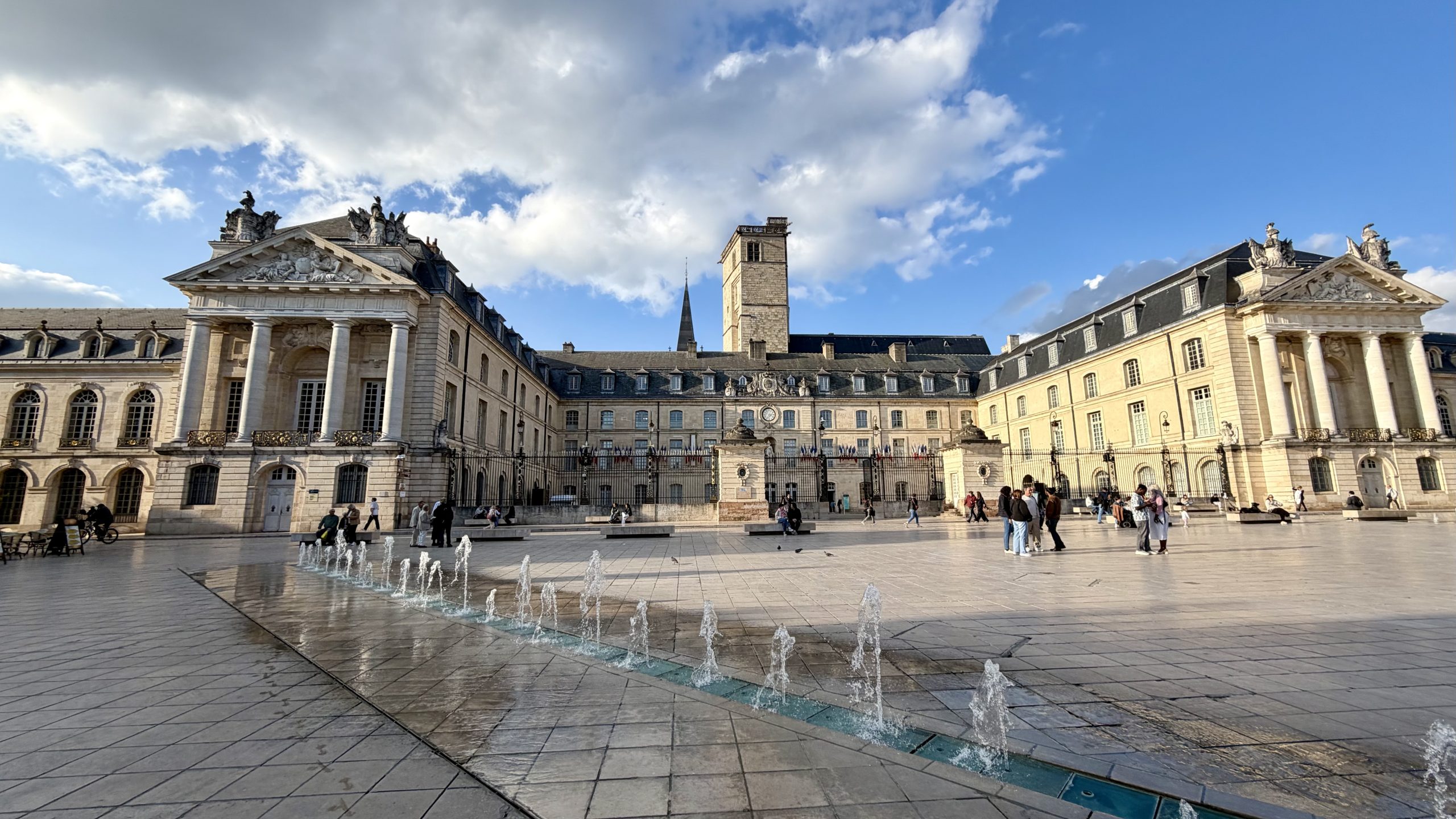
After a lot of conversations, long walks, and asking ourselves what we want the next chapter of our life to look like, we’ve decided it’s time for a change. This May, Joan and I are moving to Dijon, France.

Bend has been our home for the past nine years, though we’ve bounced around between LA and the Bay Area for work, it’s here where we’ve built community, friendships, and a life we’re deeply grateful for. Leaving Bend doesn’t mean we’re closing the book on this place or the people here. We’re just turning the page.

This move isn’t about running from anything. It’s about curiosity, a different pace of life, and choosing new adventures while we still can. Everything that matters most to us — connection, time outside, shared meals and good conversations — all come with us.

We are excited. And more than a little nervous. And very aware of how lucky we are to get to do this.

And yes, our door is always open to friends. Burgundy hikes, bike paths, wine, and long, leisurely French lunches are officially on the menu. ????

Posted on

Counting Down to Kilimanjaro

In a few weeks, I’ll be traveling to Tanzania. It’s what is technically referred to as a “long-ass” trip, flying from Redmond to San Francisco to Doha and finally to Arusha. But not really finally, because then I hop in a taxi to Moshi, another hour away, where finally… FINALLY… I’ll meet up the other 12 good people climbing with me.

I’ve put together my packing list (your feedback welcomed) and reviewed it with a fellow Six-Pack of Peaks Challenger and Kilimanjaro alums Jason (watch the interview).

Summit Day

I leave for Tanzania in three weeks from today. We begin our 7-day trek on the Machame Route on Sunday, January 18th and our Summit Day starts in the wee hours of the morning on the 23rd, which is in…

I have three weeks to finalize my packing and wrap up my training.

“The word adventure has gotten overused. For me, when everything goes wrong – that’s when adventure starts” – Yvon Chouinard

Planning for Adventure

I don’t know if anyone has stumbled into an adventure up Mount Kilimanjaro. It’s the sort of adventure that requires loads of advance planning; budgeting expenses, booking flights, training, even meeting with my doctor.

Undoubtedly there will be surprises on this adventure. When experiencing anything for the first time, every step unveils something new and often unexpected, no matter how many YouTube videos you’ve watched or trip reports you’ve read.

Taking on an adventure like climbing Kilimanjaro requires a level of planning. It’s mostly a matter of prioritizing what matters to you. While plenty of people claim to love “outdoor adventure” (whatever that means), fewer take the necessary steps to prioritize adventure as part of their month-to-month, week-to-week, and day-to-day lives.

It’s part of why I created the Six-Pack of Peaks Challenge. The challenge involves committing yourself to adventure. Planning hikes that may require a full day (or two) up mountains that will test your body and spirit. There will be surprises, but you won’t stumble into completing it without at least a basic plan.

Cheers to an adventurous 2026!

Where is adventure calling you in the year ahead?

Posted on

Another Look at Energy Miles

I returned this weekend from a six-day backpacking trip in the Sawtooth Mountains, and I was curious how it stacked up against the energy miles I calculated for my upcoming Mount Kilimanjaro climb in January 2026.

DayItineraryMileageElev. Gain (ft.)Energy Miles
1Grandjean to Sawtooth Lake9.8357016.9
2Sawtooth Lake to Middle Baron Lake13.89289619.7
3Baron Lake to Middle Cramer Lake9.8187813.6
4Cramer Lake to Ardeth Lake10.3208714.5
5Ardeth Lake to Smith Falls10.14114212.4
6Smith Falls to Grandjean15.0146015.9
TOTALS68.941203393

It’s worth noting that our top elevation on the Sawtooth Loop was 9,495 feet — almost 10,000 feet lower than the top of Kilimanjaro. Also, we were carrying all our own gear (~30-35 lbs), whereas we will be carrying less weight on Kili.

For easy reference, on Kili, our total mileage will be 35.75 miles and 69.7 energy miles — less than on this trip.

The big wildcard for Kilimanjaro is the elevation. At sea level, the effective percentage of oxygen in the air is around 20%. At the top of Kilimanjaro it’s about 10%, making our bodies work that much harder to get enough oxygen to hike (see this altitude to oxygen chart for reference).

There is no simple modification to Petzoldt’s energy mile theory that accounts for the additional effort required with less oxygen, but it’s safe to say it will take longer, require slower movement, with more frequent and longer rest breaks.

The takeaway from this? We worked hard on the Sawtooth Loop backpacking trip. If the elevation were not a factor on Kili (though it most definitely will be), this would’ve measured as a more difficult hike, done in six days vs the seven we will take on Kili.

Posted on Leave a comment

Training for Mount Kilimanjaro

In January 2026, I’ll be climbing Mount Kilimanjaro in Tanzania. I’m organizing a group of intrepid adventurers from the Social Hikers community for to climb this mountain via the Machame or “Whiskey” Route. And as of June 18th, we have room for additional group members. Join me!

At 19,341 feet above sea level, Kilimanjaro is the highest peak on the continent of Africa, making it one of the Seven Summits. It’s also 4,836 feet higher than the tallest peak I’ve hiked to date, Mount Whitney.

There are a number of factors that make this challenging. The weather can be wet, cold, snowy and windy. I don’t mind cold — I’ve experienced that on Mount Rainier — but I’d be very pleased if it didn’t rain on us.

The elevation is the big wildcard. I’ll be talking to my physician about a prescription for Diamox to help prevent altitude sickness, and I’ll be summiting at least four 14ers this year to see how my body responds at higher elevations. It’s been seven years since I last summited a 14er.

Then there is the hiking itself. I’ve estimated the daily milage and the gross elevation gain (and loss) each day, and the actual mileage is not bad. The gross elevation gain is non-trivial, but nothing I haven’t done before. Just not at 19,000 feet.

The table below shows the approximate mileage each day as well as the gross elevation gain. As you see, our mileage each day never goes over 10 miles, and our elevation gain does not exceed 4000 feet.

DayItineraryMileageElev. Gain (ft)Energy Miles
1Base to Machame Camp7395114.9
2Machame to Shira Camp328498.7
3Shira to Barranco Camp6268711.4
4Barranco to Karanga Camp314045.8
5Karanga to Barafu Camp220966.2
6Barafu to Summit to Mweka Camp9.753993/(9200)17.7
7Mweka to Base5(4718)5
TOTALS35.7516,98069.7

What are Energy Miles?

What you might not be familiar with is the last column, labeled Energy Miles. In 1976 Paul Petzoldt the founder of the National Outdoor Leadership School (NOLS) created a formula for hikers to calculate their energy needs. The formula estimates “energy mile” units. One “Energy Mile” is the energy required to walk one mile on flat terrain. The formula adds two more “energy miles” for every 1000 feet of elevation gain.

Using this formula, the energy miles approximates the effort of walking a level route. So the first day’s 7 miles and 3951 vertical gain would roughly equate to hiking 14.9 miles on a flat trail.

This does not account for the increased difficulty (or more accurately, the diminished efficiency) of hiking at higher elevations where there is less oxygen available. But it does provide a way of normalizing the daily mileage numbers into something a little more realistic.

My Kilimanjaro Training Plan

In my experience, the best training for hiking is… hiking. The reality is that it’s not always practical to devote 6-8 hours hiking several times a week. And so, my training incorporates three key components:

  1. Hiking and Backpacking – I’m aiming to do at least one long hike each weekend, as well as back-to-back day hikes and backpacking.
  2. Cardiovascular Fitness – My go-to for this is a 45 to 60 minute ride on my Peloton 3-4 times each week.
  3. Strength Training – Legs, core, back and shoulders 2-3 times each week.

My workouts are logged on Strava, so feel free to follow along.

Because my climb is in January, most of the higher mountains here in Central Oregon will be covered in snow from November onward, so it will require some creativity to get those long hikes with vertical gain in, and probably more snow hikes up Black Butte.

Have you climbed Kilimanjaro? Any tips to share for training? Is Kili on your bucket list? Leave a comment and let me know.

Posted on Leave a comment

The Teton Crest Trail: Will the Second Time Be a Charm?

Grand Teton National Park

Five years ago in October of 2016, I flew from Seoul, South Korea (where I lived for a year) to Salt Lake City. From there I rented a car and drove to Jackson, Wyoming where I was speaking at a conference. I got there a few days early, planning to meetup with another thru-hiker traveling from Germany. Our goal? To hike the Teton Crest Trail in three days.

That attempt was thwarted by an early snow storm that meant winter mountaineering. We weren’t equipped for that, and because it was shoulder season, the gear wasn’t available to rent or purchase. We hiked up Granite Canyon to an elevation of about 9,000 feet when it because obvious we needed a new plan.

So we camped on the snow for the night, and in the morning made our way back down to the valley trail which skirts the eastern flank of the range. It was still a pretty spectacular trip.

This year, I’m finally getting another crack at the Teton Crest Trail, and it’s coming up soon.

Countdown to the Teton Crest Trail

Day Hour Minute Second

I’ll be posting details of the planning and the full trip report over at SoCalHiker.net if you’d like to follow along.

Posted on 1 Comment

Preparing to Bikepack The Big Lonely

My Bikepacking Rig

Many people know that I’ve done a bit of hiking and backpacking through the years. I’ve thru-hiked the John Muir Trail not once but twice. I’ve bagged peaks across the western US (and even a few in South Korea). I founded the Six-Pack of Peaks Challenge series.

You might not know that I’ve done some mountain biking. In fact, mountain biking led me (indirectly) to starting up SoCalHiker.net and planning that second thru-hike on the JMT. I living in south Orange County and mountain biking 2-3 times a week. One one shuttle ride down the San Juan Trail off Ortega Highway, I misread a simple drop and went over the bars, fracturing my left wrist in two places. I couldn’t ride for 3-4 months, so I focused on hiking.

Fast forward another ten years. My friend Ben and I were talking about bikepacking the Deschutes Tier of the Oregon Timber Trail, a bikepacking route that wanders from the California border all the way through Oregon to the Washington border. We just wanted to do one of the tiers, and yet, on the first day out I went over the bars again, this time creating a “non-displaced fracture” to one of my ribs.

Let’s just say my mountain biking and bikepacking experience hasn’t been as successful as my hiking and backpacking adventures.

I believe in the power of setting big gnarly goals. They help stretch you and give you something to grow for. One such goal for me is to complete The Big Lonely — a 350+ mile, self-supported bikepacking race in Central Oregon that helps raise funds for the Adventure Access Fund.

Last year’s race there were 12 entrants, and only half of them completed the route. In my mind, a “win” will mean completing the route without breaking a bone or my bike.

My goal is to complete it over five days, not a pace to win a spot on any podium, but maybe within the realm of possibility.

I’m still primarily a hiker and backpacker, so this endeavor is reminding me what it’s like to be a total noob. It’s humbling.

If you have any words of wisdom, I’ll all ears.

Countdown to The Big Lonely

Day Hour Minute Second