Posted on 3 Comments

Is Social Media Turning us into Pathetic Losers?

This week I ran across two videos that you should watch. They paint a rather bleak view of technology and how it’s not really helping us become more connected. Not that this is the fault of technology. We are (I’m painting with broad strokes here) misusing technology.

The first is titled The Innovation of Loneliness. Based on Sherry Turkle’s book Alone Together (affiliate link), this video suggests that we are using social media to collect connections, rather engage in deeper, meaningful communication. We are curating our personal brand rather than interacting with transparency, openness and vulnerability.

The second video is titled I Forgot My Phone. It focuses on our fixation with these little devices that have invaded our every waking moment. What’s telling is the title itself. Is Charlene making a personal choice to not use her phone, or did she–as the title suggests–simply forget her phone?

In his book You Are Not a Gadget (affiliate link), Jaron Lanier explains how we restructure our lives and the way we do things to conform to the limitations of technology. We become slaves to the tools, rather than the masters we are meant to be.

Where are you on the social spectrum? Are social tools and technologies helping you build deeper, more meaningful connections? Or do these short videos ring true?

Posted on 1 Comment

Connected, The Film

Every month a terrific group of bright minds meets in Los Angeles to share, challenge, drink and discuss how we can live an enlightened life. The gathering is known as Mindshare, and if you live anywhere within driving distance of downtown LA, I highly recommend it.

This past Thursday, Mindshare hosted a preview screening of Tiffany Shlain’s new film: Connected.

Connected takes on what it means to be connected in the 21st century. How does technology factor in? Why do we connected? Is our growing interdependence the next step in human evolution?  Shlain went in with this vision, but as so often is the case, life gets in the way. In her case, it was the cancerous brain tumor in her father, and her own high-risk pregnancy that caused her to tweak her vision for the film in a personal way.

The end result wasn’t revolutionary or mind-bending. The key premise is that we are evolving as a species, specifically by becoming more interdependent. To continue to grow, we must connect with each other — rely on others — and build stronger connections not only between the two hemispheres of our own brain, but between each other. The ideas are not ground-breaking. But Shlain tells the story in a way that is both personal and memorable.

Connected is currently playing in Los Angeles at the Arclight in Hollywood. If you get a chance, check it out.

Posted on 1 Comment

Face-to-Face Still Matters

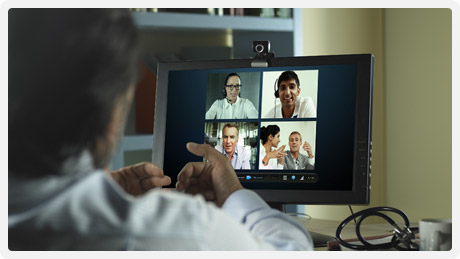
Earlier today we wrapped up three consecutive days of video teleconferences to train five new knowledge managers. The trainees were located in Greenville, Calgary and Houston, while the other trainers and I were primarly located in Southern California. In better economic times, our trainees would have travelled to Southern California for the week,  spending some serious face time not only with those of us leading the training, but with most of the core KM team.

This face-to-face KM immersion did two things:

First, it allowed them to focus on what they where learning, without the distractions of the everyday office activities around them. Sitting and working side-by-side with the KM team gave them an opportunity to really absorb a great deal of knowledge that wasn’t necessarily a part of the training outline.

But the second, and even more important result was the relationships that were built. In most cases, this gathering was the first time we worked together. In addition to spending most of the work week together, we would eat lunch together and even go out afterwards for dinner or go sailing. The bond that formed provided a solid foundation for an ongoing working relationship. They felt comfortable coming to us because they knew us well. They trusted us, and knew we were there to help them. They understood the gravity of their new role as knowledge managers. They reached out for help or to brainstorm solutions for integrating knowledge management into their community’s work processes, and gladly participated when we asked them to help us with an enterprise KM initiative.

Doing this via video teleconference has required a change in approach. Sessions are shorter, with more pre-reading and pre-work. There are exercises that require multiple touch points with the KM team, ensuring that they will talk with someone on the team on a fairly regular basis. Will this suffice? Not a chance.

Fellow KM-er David Gurteen recently shared a great article on Harvard Business Review via this tweet:

[blackbirdpie url=”https://twitter.com/#!/davidgurteen/status/38593360214106112″]

In his article Why Face-to-Face Meetings Make All the Difference, Stephen Greer describes how use used face-to-face meetings to build and strengthen relationships with his leadership team. Greer concedes that after the relationships had been established, he was able to reduce the frequency of meetings, and conduct more of them remotely.

“Over time, once personalities gelled and relationships bonded, we were able to scale back the frequent flyer miles by making it a quarterly face-to-face meeting, with monthly conference calls in between. Today a videoconference would be the preferable alternative, as technology is definitely bringing distant operations closer together.”

Note that he didn’t jump straight away to conference calls. He notes that it took time to build and bond relationships with face-to-face meetings. Only after those relationships were bonded could they scale back the frequency and begin leveraging alternative technology like video teleconferencing.

Yes, face-to-face still matters.

The challenge is this: What do you do when face-to-face is not an option? How do you build those relationships that are necessary to create trust between people who don’t really know each other that well?

Posted on 12 Comments

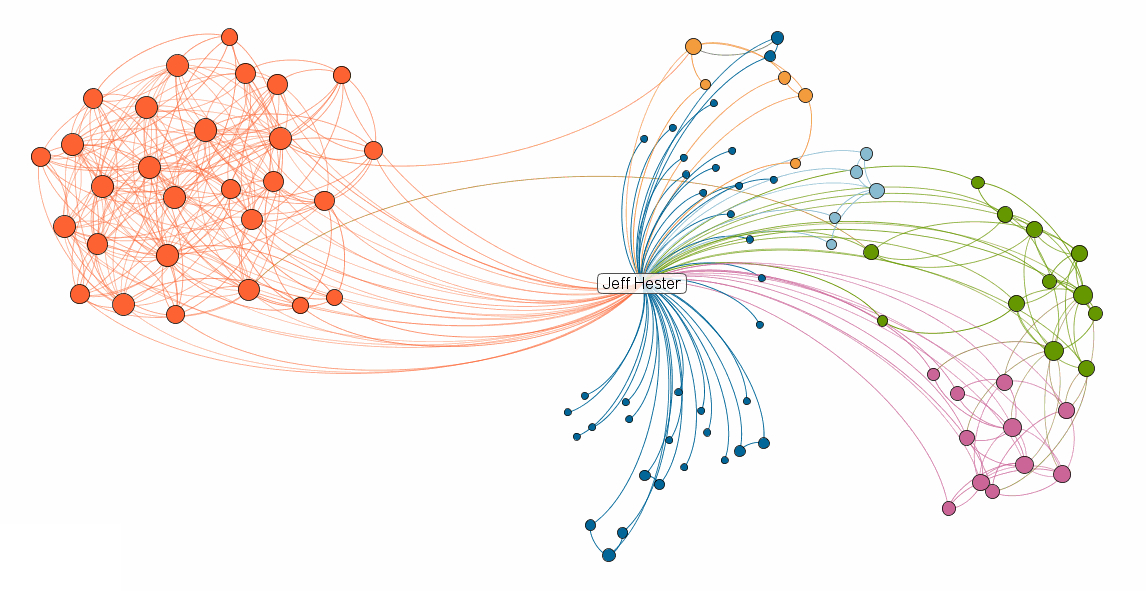
Visualize Your Professional Network with InMaps

LinkedIn Labs has introduced InMaps – a visualization of your LinkedIn network. I first heard about InMaps via a Tweet from fellow #SMMOCer Mel Aclaro. LinkedIn wisely made sharing easy, and so a quick search will find plenty of fresh tweets about this as people discover the new feature.

I gave InMaps a quick spin and quickly discovered LinkedIn’s not-so-subtle ulterior motive: You can’t create a visualization unless you have at least 50 connections and your profile is at least 75% complete.

I’ll bet you a cold beverage that LinkedIn enjoys an sudden surge in both profile completion and network connections as a result.

For LinkedIn, it’s a brilliant move. By offering something sexy that people want (the groovy diagrams) but requiring them to step up and engage on a deeper level, the entire network wins. And (theoretically) they drive the behavior that they want from their community — people sharing deeper knowledge about their experience and connections.

How can we bring change to our community/organization/business/world? One small incentive at a time.

If you care, you can check out my visualization, create your own, or connect with me on LinkedIn.

Posted on 6 Comments

Dropping Names

I wanted to say thanks to the many wonderful people I had a chance to meet at UXWEEK2006 (in no particular order): Steven Berlin Johnson, author of Everything Bad is Good For You and Emergence (which I’ve added to my “must read” list); Ray Daly of the NEA; Chiara Fox, Dan Saffer, Brandon Schauer and Ryan Freitas, all of Adaptive Path (who organized the whole shebang); Jace Cole of Allstate Insurance; Bradley Horowitz of Yahoo; Betsy Pitlick of Washington Mutual; Luc-Rock Paquin of Canada Business Industry; Bryan Busch, Geniant; Jeff Veen, Google; Craig Duncan of the UN OCHA in Geneva, Switzerland; Alice Yeo, Autotrader.com; Jane Louise Webster, Council on Foundations; John Vincent, LL Bean; Kevin Lingerfelt, Americans United for Separation of Church and State; Dan Brown, author of Communicating Design; and Bryan Chamberlain, Nationwide.

To anyone I’ve left out, my apologies. To all, I look forward to the next time our paths cross. For photos, check out the UXWEEK2006 tag on Flickr.

technorati tags:

Posted on Leave a comment

BigBlueBall Meetup at the House of Blues

hob.png

This BigBlueBall we live on is made smaller every day by technology. With the Internet, we can chat, talk and even see each other from thousands of miles apart, all with ease. But all the technology in the world cannot still take the place of a live, face-to-face interaction.

At BigBlueBall.com we have moderators from all over the world, most of whom I’ve never met in person. When the opportunity arises to meet in person, I grab it.

Last Sunday was such an occasion. Shifter (aka Marcus) and his family are visiting Southern California on vacation. Dr. Kimble (aka Emily)lives down here, but we had never actually met. I couldn’t let the opportunity slip away. We met at the House of Blues in Anaheim for their Gospel Brunch. Sharing food is a wonderful, relaxed way to get to know one another, and it was capped off with a soulfully rockin’ gospel concert. I can’t tell you the names of the musicians, but I can tell you that they were good. Listening to them you got a real sense of the roots of rock.

It was great to meet Marcus, his family, Emily and her mom. I hope to get a chance to meet more of the BigBlueBall regulars in the future.