Back in October 2012, LinkedIn announced a redesigned profile page. They’ve been slowly rolling it out to users, and finally updated mine this week.
What’s new in the new profile design?
For starters, the interface has been refreshed, with sections clearly noted. And it features inline editing, meaning you can make changes right from your profile without switching to a separate “edit” view. See something that needs updating? You can change it right there.
Your recent activity is highlighted near the top of your profile. While this is useful to see if someone is actively interacting on LinkedIn, it will make me think twice before posting a link or liking an update.
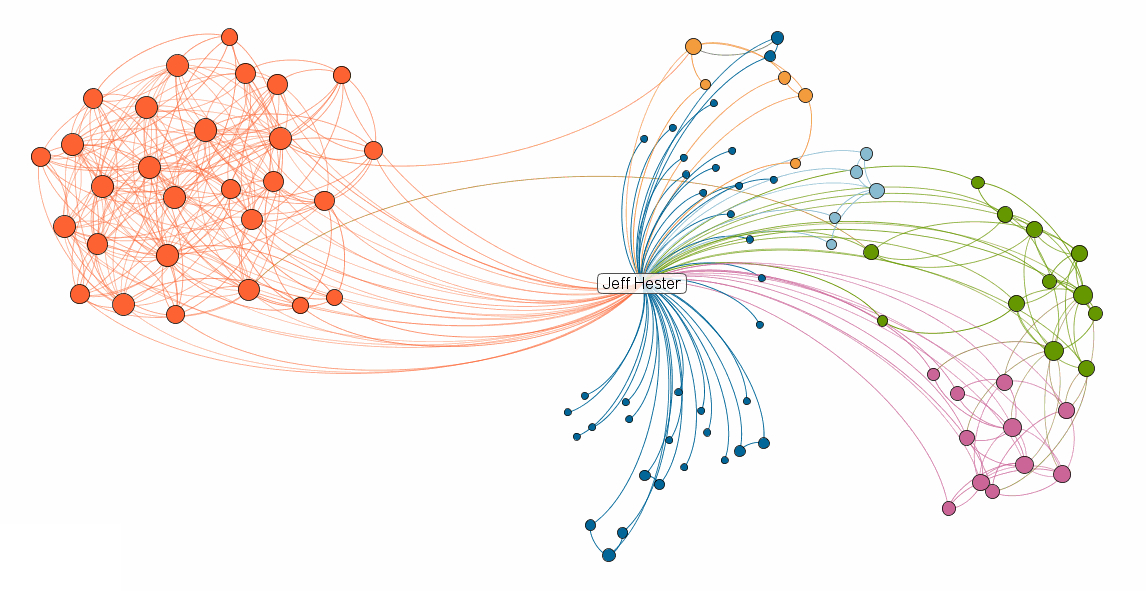
There is a new visual representation of your network–a sort of simplified InMaps view–and you as you hover over other LinkedIn members, you’ll see a card pop-up with additional info about that person. Their goal is to stimulate interaction and engagement with your network.
What’s no longer there?
There are some features, particularly third-party apps, that don’t show up anymore. I only used a couple of these; the TripIt widget and the Reading List. Not really critical.
Overall, I like the new design. It’s not going to rock your world, but it’s a nice update to an otherwise stodgy user interface. But what do you think? Let me know in the comments, and feel free to connect with me on LinkedIn.
Leap year comes once every four years. But what to do with an extra 24 hours?
This year I had the opportunity to spend Lead Day feeding my mind at a simulcast of the 2012 TED conference. I am a big fan of TED. The conference was started in 1984 by my first year architecture professor who envisioned a gathering of great minds discussing big ideas in technology, education and design. Chris Anderson took the reins, expanded the scope and now TED is nearly omnipresent. The TED Talks videos can be found all over, and TEDx events leverage the popular format on a local scale.
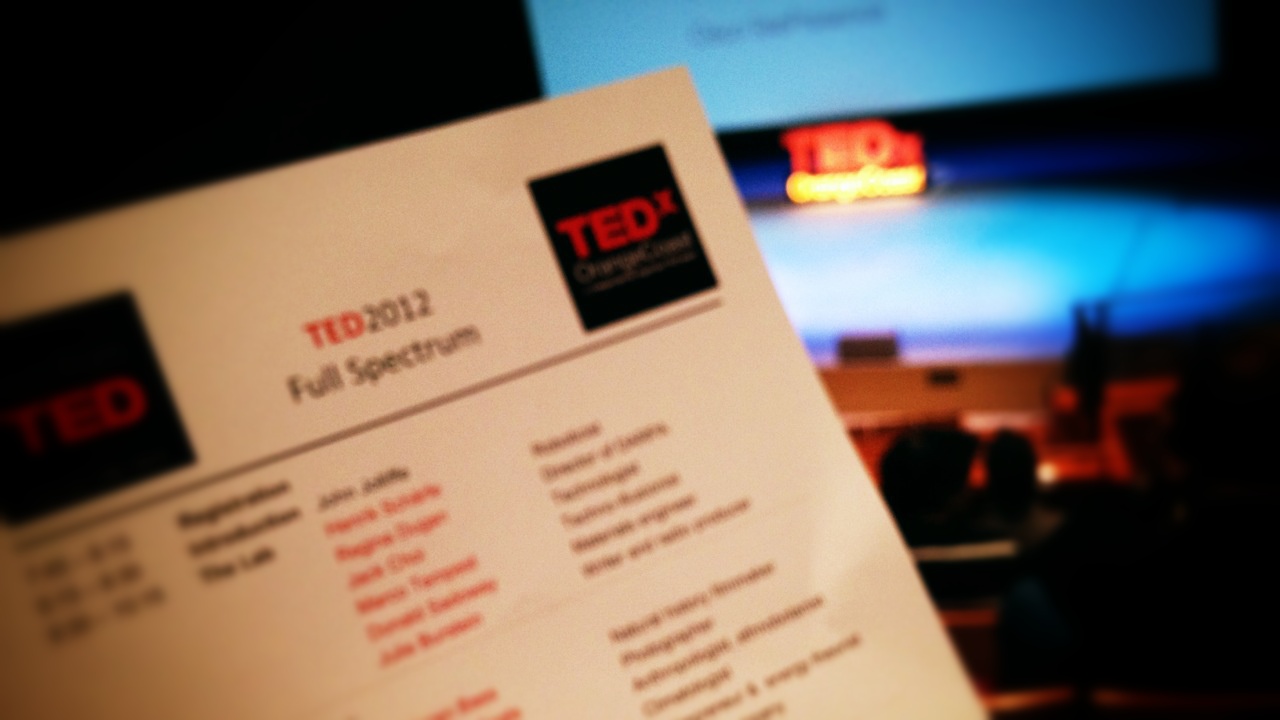
Last year I attended the local TEDxOrangeCoast at Segerstrom Hall — a remarkable day in itself. And this year, the big TED conference in Long Beach (a 3-day event) opened their virtual doors to TEDx attendees for a simulcast of the Day Two talks. In Orange County, we met at the beautiful Soka University performing arts center.
TED speakers get roughly 18 minutes on stage to share their stories–which are varied. Their titles range from techno-illusionist to ethnobiologist; from secret keeper to code activist. Some are selected for their ability to move and inspire. Others for their research (and certainly NOT their speaking skills). And some are just plain entertaining. The net result? Brain food for fertile minds. Leap Day inspiration!
Eventually you’ll be able to see these talks online. Until then, I wanted to share highlights from two of those speakers, as well as observations from the backchannel.
Reid Hoffman, Social entrepreneur
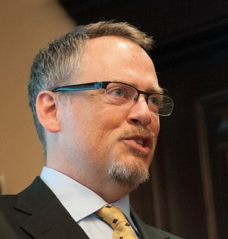
Reid Hoffman is probably best known as co-founder of LinkedIn, the popular professional network. He’s also an investor, and entrepreneur and most recently, an author.
One thing Reid is not: a great speaker. He referred to a written script during much of the talk, making for a dry presentation of an important topic.
The delivery was lacking, but the message — while not really new — was worth hearing again.
We used to “climb the corporate ladder.” According to that model, when you graduated from college, you took an entry-level position. You worked hard and got promoted. With each step up the ladder, you gained responsibility, power and money.
That model no longer works. Today, the paradigm is not the ladder, but the network. We need to think like entrepreneurs, and treat our careers like a business. To be clear, understanding and leveraging your network is not the same as “networking.” It isn’t exchanging business cards and calling prospects. It is looking at your actual network of friends, colleagues and cohorts. Your network includes the people that you can help, and who can help you solve problems, move mountains, and get things done.
Not surprisingly, Dunbar’s Number came up. Reid suggested that 150 is not really a network limit, but memory limitation. Tools (such as LinkedIn, of course) can extend our memory, allowing us to build bigger networks.
@TEDNews: “The network of you is not just what you broadcast about yourself, but what others say about you.” Reid Hoffman #TED”
What piqued my interest was Reid’s thoughts on how your network is a reflection of who you are. This isn’t really a new idea. Even as teenagers, most of our parents wanted to make sure we didn’t hang out with the “wrong” crowd. But in today’s world of connected-ness, many people see a connection as a prospective customer — and the more the merrier. In reality, it’s less about the numbers (unless you’re only about the numbers), and more about who you want to be. Whether we lead or follow, the crowds we run in reflect who we are.
Lior Zoref, Crowdsourcing advocate
I loved this colorful kid from Tel Aviv. He opened with a video recorded a year ago, where he shared his dream of speaking at TED. His best friend mocked him, but Lior promised that when (not if) he finally did speak at TED, he would play this video to remind him of his words.
Lior Zoref is not a household name. He is not particularly famous. But he is an evangelist for crowdsourcing, and his fervor for the wisdom of crowds was his ticket to the main stage at TED. Lior presented what he claims was the first-ever “crowdsourced TED talk.” He tapped into his network of friends on Facebook and Twitter to help him create his talk — a mix of crowdsourcing stories from around the globe, liberal doses of humor and an extremely fun, live crowdsourcing experiment.
Photo: James Duncan Davidson
Early in his talk, he brings out a live ox onto the stage. The audience is asked to pull out their smartphones, visit a special web site and enter their guess at the animal’s weight. He continues his talk, and towards the end…
Zoref says crowd estimated ox’s weight at 1792 pounds; the actual weight is 1795 #TED
Over 500 people submitted their guesstimate, with responses ranging from 385 pounds to over 8000 pounds. The average of the crowd came in at 1792 pounds. The actual weight of the ox? 1795 pounds… just three pounds more. An amusing, live illustration of the wisdom of crowds.
Through crowd sourcing we can upgrade our brain. We are entering the age of mind sharing @liorz#TED
Can crowdsourcing really make us smarter? Perhaps, but not all kinds of questions are well-suited to this kind of “guess-the-number-of-jelly-beans-in-the-jar” kind of problem-solving. Would you want to design a bridge the same way?
No matter what you think of crowdsourcing, you had to admire Lior’s enthusiasm and his ability to dream big.
Back in the Real World…
There are a few people that I repeatedly bump into online and offline, and at TED I had the opportunity to break bread with two of them over lunch. Chris Fleury and Emily Crume. We are perpetually crossing paths at various local events such as SMMOC, and over and over online. It was great to get a chance to know them better. The face-to-face interactions proved again to be as valuable — or more valuable — than the simulcast speakers of TED.
There was much more at TED than will fit in 1000 words. Here are some additional highlights:
Earlier this week, LinkedIn registered their 100 millionth member. They are currently registering a new member at the rate of one per second. While the number still lags behind Facebook, it is a significant milestone and shows strong growth for the professional networking service.
I first heard about the milestone when I received (along with a million others) the following email from Reid Hoffman, co-founder and chairman of LinkedIn:
Dear Jeff,
I want to personally thank you because you were one of LinkedIn’s first million members (member number 548570 in fact!*). In any technology adoption lifecycle, there are the early adopters, those who help lead the way. That was you.
When we founded LinkedIn, our vision was to help the world’s professionals be more successful and productive. Today, with your help, LinkedIn is changing the lives of millions of members by helping them connect with others, find jobs, get insights, start a business, and much more.
We are grateful for your support and look forward to helping you accomplish much more in the years to come. I hope that you are having a great year.
Honestly, I have not been a very active LinkedIn user until recently, and I am still learning the ropes. But if you haven’t checked it out, it’s probably time for a fresh look. That’s why I’ve signed up for Neal Schaffer‘s upcoming LinkedIn Workshop on April 19th at SMMOC Labs.
Neal is an recognized LinkedIn expert and author of Understanding, Leveraging and Maximizing LinkedIn. He held a similar workshop back in the fall and got rave reviews. It’s a hands-on workshop — bring your laptop and be prepared to take specific steps that will help you get more value from LinkedIn. Join me there, and feel free to connect with me on LinkedIn.
So What Does 100 Million Members Look Like?
Here is a great infographic that illustrates what 100,000,000 members looks like.
Last month, I shared how face-to-face meetings still matter. You might assume that the realm of social media — which by it’s very definition encourages online community and relationship building — wouldn’t really gain much through real life interaction. You’d be dead wrong.
Social Media in the Real OC
Scott Stratton at LinkedOC
Here in Orange County we are fortunate to have a thriving social media community, supported by a number of regular, live events. Bryan Elliot’s LinkedOC leverages LinkedIn and holds monthly networking events with great speakers such as Scott Stratton and Seth Godin. These are big events, but you meet a number of interesting people who are building their tribe. LinkedOC lies somewhere between a social media group and an old school networking meeting.
My favorite event remains Bob Watson’s Social Media Masterminds of Orange County — or simply SMMOC. This group meets nearly every week on Saturday mornings from 9-11am in Costa Mesa, and draws a wide range of people with an interest in social media — from consultants to mommy bloggers and real estate professionals to enthusiasts.
The whiteboard at SMMOC. Click to enlarge.
The agenda is flexible. There is no projector or monitor, but there is wifi in the room. Attendees are free to use the whiteboard to write down discussion topics or share their Twitter handle. Bob is a terrific facilitator, deftly leading the group through two hours of fantastic interaction and learning. There are just three rules: no self-promotion, no acronyms (at least, not without a definition) and there are no dumb questions.
This group is up on the latest happenings in the social media realm, so whether you’re new to social media or an old pro (what defines someone as an old pro in social media??), you will learn and grow from the discussion. But the real value is in the relationships that are made and bonded through the face-to-face interaction.
These people have helped me refine how I use social media, encouraged me to improve my blogging and helped me stay on top of the ever-changing social media landscape. My life is richer for the relationships.
Can you develop community and relationships entirely using social media alone? Certainly, but real-world face time strengthens those connections and accelerates the process.
How are face-to-face interactions helping strengthen your social and professional network?
Social media is often cast as being at odds with enterprise initiatives such as knowledge management. There is a sense that as people embrace and use social media tools like Twitter, Yammer, LinkedIn and Quora, the enterprise loses control over their knowledge. While this is certainly true, it’s also nothing new. There have always been and always will be opportunities and reasons to search the Internet vs searching the Intranet; for participating in an Internet discussion group vs. one in your enterprise community; and for leveraging external wisdom vs. known internal resources.
Social media and knowledge management aren’t at odds at all. In fact, the most successful knowledge management systems embrace social media, but with a business mindset. The smart KM implementations leverage blogs, subscriptions, communities, discussion forums, and member profiles. They tie it together with search in a single working environment. And they look for opportunities to tie in other tools to streamline knowledge sharing — everything from instant messaging (i.e. Sametime) to micro-blogging (i.e. Yammer).
A few of the comments that really stuck out in our discussion today bear this out. We were asked for tips on optimizing the integration between social media applications and intranets. Here are a few notable responses:
I like Stan Garfield’s advice to meet people where they are, which for many is still the email inbox.I’ve found the ability to subscribe and get email notifications to be an invaluable tool for engaging the workforce. I would even say it’s essential, and we’ve found it to be a tremendous attraction at Fluor.
LinkedIn Labs has introduced InMaps – a visualization of your LinkedIn network. I first heard about InMaps via a Tweet from fellow #SMMOCer Mel Aclaro. LinkedIn wisely made sharing easy, and so a quick search will find plenty of fresh tweets about this as people discover the new feature.
I gave InMaps a quick spin and quickly discovered LinkedIn’s not-so-subtle ulterior motive: You can’t create a visualization unless you have at least 50 connections and your profile is at least 75% complete.
I’ll bet you a cold beverage that LinkedIn enjoys an sudden surge in both profile completion and network connections as a result.
For LinkedIn, it’s a brilliant move. By offering something sexy that people want (the groovy diagrams) but requiring them to step up and engage on a deeper level, the entire network wins. And (theoretically) they drive the behavior that they want from their community — people sharing deeper knowledge about their experience and connections.
How can we bring change to our community/organization/business/world? One small incentive at a time.
Twitter, Foursquare, Facebook, LinkedIn and the long list of other social networks vying for attention have captured plenty of media coverage as millions ofpeople jump on the bandwagon. The tools make it easy to build large lists — a “network” of followers, friends and so-called colleagues. Many people forget that it’s not about how big your network is.
British anthropologist Robin Dunbar pegged the optimal number of meaningful relationships at about 150, theorizing that “this limit is a direct function of relative neocortex size, andthat this in turn limits group size … the limit imposed by neocortical processing capacity is simply on the number of individuals with whom a stable inter-personal relationship can be maintained.” As Jeff Pulver likes to say (and emphasizes in his 140 Characters conferences) it’s about building relationships. It’s about strengthening existing relationships and building new ones. Relationships allow you to grow personally and professionally. Relationships allow companies like Zappos to build fanatical customerloyalty and grow your business.
If you are not using these tools to build relationships, you’re missing the true value of social networks.
How are you using social media to strengthen connections with friends, family, associates or clients?



 Reid Hoffman




 Twitter, Foursquare, Facebook, LinkedIn and the long list of other social networks vying for attention have captured plenty of media coverage as millions ofpeople jump on the bandwagon. The tools make it easy to build large lists — a “network” of followers, friends and so-called colleagues. Many people forget that it’s not about how big your network is.