Posted on 5 Comments

The What and Why of WordCamp

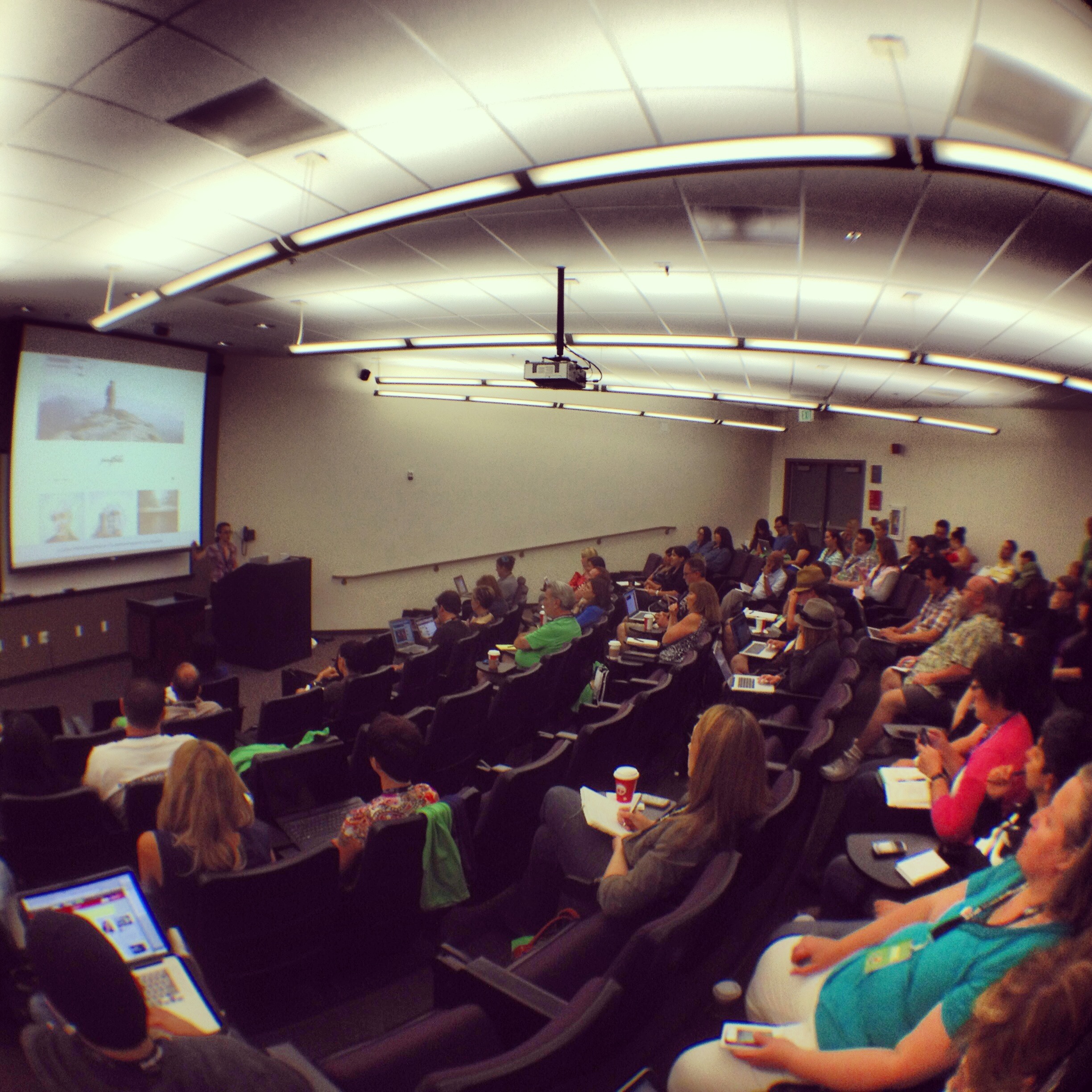
Saturday I spent the day with a couple hundred web developers, designers, publishers and blogging enthusiasts at an event called WordCamp OC. This the fourth annual WordCamp Orange County, and the eleventh WordCamp I’ve participated in.

WordPress OC

What is WordCamp?

I shared my plans for WordCamp with one of my hiking friends, Paul. He reasoned, “Oh, that’s why you’re so good at Words With Friends!” No, WordCamp isn’t about word play or word games. WordCamp is about WordPress — the open source content management system that powers about 22% of all new web sites on the Internet. As far as conferences go, these are local events organized by volunteers with the support of the WordPress community at large. Often people travel across state lines or even the country to attend. The speakers are practitioners who use WordPress, build sites using WordPress, and speak from practical experience. And unlike most professional conferences where registration often can cost hundreds or thousands of dollars, WordCamp OC was a mere $35, including two days of sessions, a t-shirt, coffee, lunch, snacks and beverages. That alone is worth much more, but the real value doesn’t show up on the conference schedule.

Why WordCamp?

wcoc2013_badge_im_heading_toThe challenge with WordCamp is serving the market. There’s a wide range of people interested in WordPress. Many are web developers, often specializing in building complex web applications using WordPress as a framework. Others are designers, trying to figure out how to create head-turning designs on a well-supported platform with a huge market. And still others own small businesses, or are aspiring entrepreneurs or bloggers looking to establish or just improve their own web presence.

I’ve been designing and developing web sites since 1995. I started building static web sites — as was the norm — but quickly moved to developing dynamic, database-driven sites. Such sites are easier to maintain and update, and quickly became the norm for most commercial sites. The challenge back in the 90’s was that the backend platform was the responsibility of the developer. Complex sites typically included a custom content management system on the backend. For me, that was built using Microsoft technologies: IIS, MS SQL Server databases and Active Server Pages (ASP).

In 2001, I began experimenting with emerging blogging platforms. At the time, Movable Type was at the forefront. I started this blog on it, and it served me well. in 2005, I made a decision to switch my development focus entirely from developing on ASP to PHP. Several of my sites were converted as well — a major task.

And in 2007, I began looking at PHP-based content management systems (CMS). I had done some development using Drupal, and was testing Joomla. But in August 2007, I made a trip to San Francisco for my first-ever WordCamp. What I saw and learned over that weekend convinced me that WordPress would become my development platform of choice. And I haven’t looked back.

The WordPress community is rich with resources — millions of smart people who willingly share their knowledge and own experience. And the WordCamp events around the world give them an opportunity to gather face-to-face for real interaction.  This interaction happens all the time, in online communities, forums, in Facebook groups, on Twitter, via podcasts and through local WordPress Meetup groups. But the annual WordCamp has become a bit like the grown-up version of summer camp. It’s a chance to reconnect with your friends and colleagues. There are equal doses of learning, sharing, fun and frivolity. It strengthens the bonds of the community. WordCamp keeps the community vibrant, dynamic and growing.

I love that we live in an age where virtual communication and collaboration is so easy to achieve. But it will never replace the value of sitting around the table sharing a taco with colleagues and talking about our world travels. And sometimes we talk about WordPress, too.

What do you find most valuable about the conferences you attend?

Leave a comment and let me know where you find value in face to face conferences.

And thanks to Brandon Dove, Jeffrey Zinn, the fantastic speakers, volunteers and attendees who all make WordCamp an event worth participating in.
 

Posted on 34 Comments

Brian Solis is MUCH Taller Online

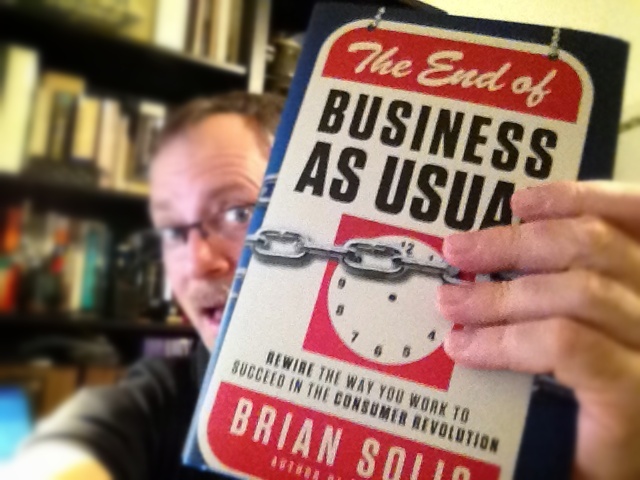
Author and analyst Brian Solis was in Orange County yesterday, speaking about The End of Business As Usual, how the consumer marketplace is changing, and how you can adapt the way you work to lead in this new marketplace.

Let me just get this out-of-the-way: Brian Solis is indeed much taller online. It’s fair to say that he is not tall. Which is perfectly fine, although it really would have been helpful in the large ballroom where he spoke if he were on a stage. Seriously.

What he lacks is physical stature he more than makes up for with his message and his passionate delivery. Solis is a life-long student, and social media has been his passion. He dove into a deep research of sentiment analysis–what he calls the interest graph–on Starbucks just because it was interesting. And as it turns out, it was (and is).

An Experiment in Crowd-sourced Note-Taking

During Solis’ talk, I monitored the back channel on Twitter. I tweeted key points and notes, and pulled out a few of the choice tweets from others in the audience to create the following overview.

The Consumer Market is Not One Audience

deborah_gibbsDeborah Anne Gibbs – @deborah_gibbs
Types of consumers: 1 traditional, 2 digital, 3 connected (#mobile + #socialmedia) #OC @briansolis

Too many companies using social media “channels” (Facebook, Twitter, Google+ et. al.) consider it a means of reaching The Audience. The fallacy is that there is no single audience. There are multiple demographics. Different kinds of consumers. If you’re trying to get people to buy a product, you have at least three kinds of consumers: The Traditional, The Digital, and–most recently–The Connected. Each group has different needs and expectations. Don’t treat them as one, or you’ll put off at least two and maybe all of them.

Social Media is Not a Digital Broadcast Medium

jcorseyJenny Corsey, APR – @jcorsey
Reach the people that will help you reach your customer. Speak to and through people to share your message. @briansolis #LinkedOC #OC

It wasn’t long ago that speakers would ask the audience to turn off their cell phones and put away their computers. To be “fiddling” with a cell phone was considered rude to the speaker. Of course, today savvy speakers know that if you can reach the connectors, you have people who will willingly spread your message.

Don’t Be Medium-alistic

mgallizziMatthew Gallizzi – @mgallizzi
Why should people follow you? What value do you bring? #foodforthought #linkedoc #oc

DigitalLADigital LA – @DigitalLA
Don’t be Medium’-alistic – designing for the technology medium instead of the purpose and human need #OC

Don’t design to the medium. Think about the people you want to connect with. What do they want from you? What can you offer that will make their interaction with you — whatever the channel — a positive and mutually beneficial experience?

BrandonSkaarBrandon Skaar – @BrandonSkaar
@briansolis Chief Experience Officer the new CEO #oc

There were a few great examples Brian shared of companies that are innovating and creating new experiences for the connected consumer:

  • BetterWorks leverages game mechanics to provide perks and rewards for employees — a very clever model that progressive HR groups should be looking closely at.
  • GiantNerd is a sports and outdoor equipment retailer that rewards it’s customers for helping other customers. In the process, they’ve created rabid fans and turned customers into a peer support network that outshines traditional customer support.
  • ShopKick is an iPhone app that uses geo-location to let you earn rewards from local retailers that you would use anyway. And it’s approaching the sort of frictionless participation model touted by Mark Zuckerberg at F8.

If there was but one key take-away from Brian’s talk, it was to start with the end in mind.

What do you want to accomplish?

The key message Solis made is that most companies (and probably a lot of people) are not asking–and answering–the right question when down to the WHY they are using social media.

AndreaMemenasAndrea Memenas – @AndreaMemenas
“Presence is not a strategy.” – @briansolis #oc

Prior to the launch of Google+ business pages, a big company called Solis to ask when they were going live.

“Why do you care?”
“Because, we need to be ready and have a strategy for Google+ and create a page.”
“Why do you need that?”
“Because all our competitors will be there.”
“So? Why do YOU need to be on Google+? Why are you there? More importantly, why are your customers there, and how do they want to interact with you there? What can you do to make them smile?”

Having a presence on Facebook, Twitter, Google+, Pinterest or whatever rolls down the interweb tomorrow is not enough.

DevineLinesMitch Devine – @DevineLines
“What is the Meaning of Like?” via @briansolis #oc http://t.co/nsc6m5dv

And collecting friends, likes, +1s or any of the other new social verbs should not be your objective.

Consider Facebook Analytics. They are not, in spite of what Facebook might lead you to believe, a measure of success. Facebook analytics can only measure activity (and only those activities that Facebook values). Facebook can tell you how many “likes” you received, and comments, and other metrics of activity. But none of this captures value or even tells you if what you are doing online is driving success.

CarterKrisKris Carter – @CarterKris
Social analytics – what is the real end result you are seeking? Measure that instead. FB engagement can= absolutely nothing @briansolis #OC

ellenlynnEllen Henderson – @ellenlynn
Although the crowd isn’t always wise, there is wisdom in whatever it is you find. You learn more anytime you study people. @briansolis #oc

There is value in metrics. But automated reports only go so far. Real wisdom comes from actually reading tweets rather than just analyzing them (especially when analysis by software alone).

eperryeperry – @eperry
What are you designing for and what do you want people to walk away with? @briansolis #linkedOC #OC

The question to ask when thinking about any form or channel for social media is this: What is it you want to achieve? When you’ve sorted out your strategy, then you can look at the market, the different kinds of consumers, the various channels and develop a strategy that incorporates everything to help you reach those goals.

Are You a Change Agent?

EmilyQuestionsEmily Crume – @EmilyQuestions
Are you a Change Agent? It takes courage + it takes vision says @briansolis #oc @LinkedOC

AAAReneeRenée Barrett – @AAARenee
“Do your employees have a #vision & #mission? If not, don’t put them in charge of #Social #Media?” #OC #SM #Enthusiasm

You’ve done your homework. You’ve thought long and hard about your strategic business goals and devised a strategy to connect and communicate with your customer using a range of social and other means. You have asked your customer what they need and want, and are prepared to deliver. Who do you have in the driver’s seat?

Today, you need to be a change agent, willing to take risks, and even willing to quit if the company isn’t willing to make the right changes. That takes balls.

Final Notes

I really enjoyed Brian’s talk, and look forward to reading his new book this weekend. He’s a terrific speaker, and refreshingly hype-free — a rare treat in social media circles. If you get a chance to hear him speak, go!

The event was organized by Bryan Elliott, of Linked Orange County. He does a great job of getting some excellent speakers to Orange County on a monthly basis. If you haven’t joined the group (it’s free), check it out.

This post was curated by Dashter, a wonderful tool for curating tweets within WordPress.

Oh, and as for the “taller online” bit, that was Solis’ own self-deprecating humor.

Posted on 6 Comments

Why Face to Face Still Matters in Social Media

Last month, I shared how face-to-face meetings still matter. You might assume that the realm of social media — which by it’s very definition encourages online community and relationship building — wouldn’t really gain much through real life interaction. You’d be dead wrong.

Social Media in the Real OC

Scott Stratton at LinkedOC

Here in Orange County we are fortunate to have a thriving social media community, supported by a number of regular, live events. Bryan Elliot’s LinkedOC leverages LinkedIn and holds monthly networking events with great speakers such as Scott Stratton and Seth Godin. These are big events, but you meet a number of interesting people who are building their tribe. LinkedOC lies somewhere between a social media group and an old school networking meeting.

My favorite event remains Bob Watson’s Social Media Masterminds of Orange County — or simply SMMOC. This group meets nearly every week on Saturday mornings from 9-11am in Costa Mesa, and draws a wide range of people with an interest in social media — from consultants to mommy bloggers and real estate professionals to enthusiasts.

The whiteboard at SMMOC. Click to enlarge.

The agenda is flexible. There is no projector or monitor, but there is wifi in the room. Attendees are free to use the whiteboard to write down discussion topics or share their Twitter handle. Bob is a terrific facilitator, deftly leading the group through two hours of fantastic interaction and learning. There are just three rules: no self-promotion, no acronyms (at least, not without a definition) and there are no dumb questions.

This group is up on the latest happenings in the social media realm, so whether you’re new to social media or an old pro (what defines someone as an old pro in social media??), you will learn and grow from the discussion. But the real value is in the relationships that are made and bonded through the face-to-face interaction.

SMMOC - Everyone participates

I’ve met and developed connections with a number of local social media mavens, mavericks and masterminds through SMMOC, including Bob (The Man) Watson, Mel Aclaro, Carina Zimmer, Scott Schang, Kirsten Wright, fellow San Clemente local Doug McClure, Matthew Gallizzi, Stacey Harmon, Chris Van Dusen, Eric Stegemann,  Michelle Lecours and too many to list here.

There is also a fair amount of crossover between this group and another of my favorite groups, the OC WordPress Meetup. Steve Zehngut and Jeff Turner of Zeek Interactive are sometimes in attendance, as are regulars Loren Nason, Cindy Ronzoni, Ross Teasley and Joan Ganter.

These people have helped me refine how I use social media, encouraged me to improve my blogging and helped me stay on top of the ever-changing social media landscape. My life is richer for the relationships.

Can you develop community and relationships entirely using social media alone? Certainly, but real-world face time strengthens those connections and accelerates the process.

How are face-to-face interactions helping strengthen your social and professional network?