Posted on 3 Comments

Gaming, Circa 1974

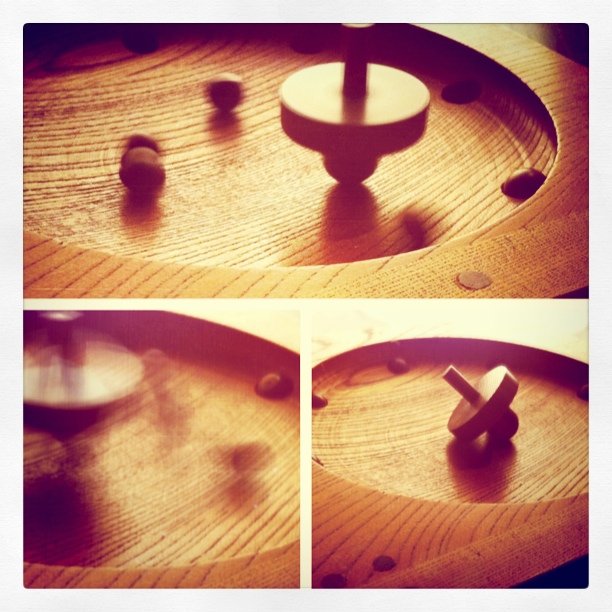
As long as I can remember, this simply designed wooden game sat on the coffee table in my grandparents living room. Growing up, I loved playing the game with my grandpa and grandma. The gameplay was simple. You spun the top, hoping it knocked the eight wooden balls into the eight divots. Each divot had a point value. Once the top stopped, you added up your score. Your opponent took their turn, and you repeated until you were tired of playing or dinner time arrived — whichever came first. Dinner usually won.

This was all long before the age of Mortal Kombat, World of Warcraft and even before the Internet (as we know it today). I didn’t care (not that I knew better). The game was just fun!

My grandparents have both since passed on, and the game now sits on my coffee table, in my living room. And the game still makes me smile. Partly, it’s the memories that it brings me. But a big part is the simple joy of a well-designed game. No batteries required.

Sometimes in life, it’s the simple things that bring us joy.

I shot these photos with my iPhone 4 mounted on a GorillaMobile tripod. To capture the motion of the spinning top, I used the Slow Shutter Cam app. I created the collage with Diptic and stylized it to give it a “70’s” look and uploaded with Instagram. I’m really pleased with the results.

Sometimes in life, it’s the complex things that bring us joy.


Posted on 19 Comments

Fitness Challenge #2

“If you haven’t got your health, then you haven’t got anything.” – Count Rugen (The Princess Bride)

2010 was a banner year for fitness, personally. I had set a goal to hike the entire John Muir Trail — plus some — and backpacked over 230 miles in three weeks, culminated by summiting Mt. Whitney, the highest peak in the lower 48 states. In my training for this, I climbed many major peaks in Southern California, even starting a website devoted to covering the trails around Los Angeles and Orange County. I published a training guide used by many to prepare for Mt. Whitney, called the Six Pack of Peaks.

I accomplished it all, and when I returned from the JMT, I was promptly swamped with work. I immersed myself in work, and though I still walk, hike and run, I’ve been woefully inconsistent about it.

And so my girlfriend and I have joined Richard and Elaine Gjonovich’s Fit Challenge at San Clemente’s Outdoor Fitness Adventure Club. I did one of these challenges a couple years ago and it really helped me get back on track with exercise and healthy eating. Now after a busy winter, it’s time to come out of my work-induced hibernation and kickstart my health again.

The Fit Challenge is a five-week program designed to help you get a jump on your fitness goals. It begins with a body composition assessment and nutrion plan. The first 3-5 days you follow a “detox” nutrition plan — no caffeine, no sugar, no processed foods or crap. Lots of “detox soup,” chicken breast, brown rice and mint tea.

My plan is to follow this until I exhaust my current pot of soup (probably 3-4 days) then switch to Tim Ferris‘ “Slow-Carb” plan as outlined in The Four Hour Body (lots of protein, veggies and legumes… and one “free day” to eat whatever the hell I want).

My current clothed weight is 233 lbs, with a 24% body fat. My goal? 215 lbs  and 18% body fat in five weeks. I’ll post again on March 12th with the results.

I realize this post is a departure from my oft-erratic subject matter, but I wanted to throw the gauntlet down. If any of you wants to join me in my crusade for personal health and fitness, drop me a line and we can encourage each other along the way.

Posted on 1 Comment

Weekly Photo Challenge: Boundaries

The Daily Post challenge to write a post a day for 2011 has started a weekly photo challenge. This week’s theme is “boundaries.”

Boundaries surround us, some made by others, some of our own creation. Boundaries can protect us and help us manage our world. But sometimes it’s helpful to look at those boundaries from a fresh perspective. This boundary is beautiful with it’s layer grids, textures and perspective. They symmetry and design could easily be taken for granted or even go unnoticed, despite the fact that I pass through this boundary at least twice a day.

Beauty surrounds us, if we have eyes to see it.

Posted on 23 Comments

29 Posts in 29 Days

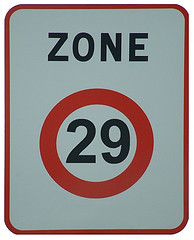
Click for the original Olibac image on Flickr
Photo credit: Olibac

On January 5, 2011,  I committed to writing a post a day for 365 days. After 29 days, I’m happy to report that I’m on track with 29 posts in 29 days. All it took was a little nudge from Scott Berkun and the other good folks at WordPress.

Just about one month into the routine, I’ve made a few observations that might be of use to anyone else considering a similar challenge.

  1. Writing a post a day takes discipline. In hindsight, I realized that I implied a post a day on this blog. That alone is a commitment (I already have a full-time career). And I promised “no fluff” — I want to write posts of the same quality that I like to read. Compounding the commitment are my work commitments and other websites, and you quickly see how a post a day is just the tip of the iceberg.
  2. Planning is essential, as I noted in post #17/365. I’m using the draft status to collect ideas and thoughts on articles I want to write, or to align publication with related events. I collect my thoughts over days and weeks, and this has greatly simplified the process of sitting down to actually write the finished article.
  3. Brainstorming helps, too! I tap into resources from Facebook and Twitter. I gain a lot of ideas from scanning my feeds on Flipboard or reading sites like The Daily Post which share topics and ideas for writing.
  4. Most of all, the support of the community helps keep you going! I have the good fortune to have a great girlfriend who inspires me (check out her blog), and a number of friends in the local WordPress and social media community here in Orange County who keep me challenged. Many thanks go out to Darin McClure, Holly Schwartz, Suki Beasla and Matthew Gallizzi. We all meet at SMMOC several times a month, and all have taking up the call to write one post a day. And we use Twitter every day, encouraging and challenging each other to keep up the cause.

The icing on the cake? I’m having fun! I have a lot to write about — much more than I have time to write. So far there is absolutely zero chance that the well will run dry. That may be either a blessing or a curse depending on your opinion of my stuff, but I’m having a good time, and more than a few people are taking the journey with me.

It’s ironic. I kicked off this year with a photo project called Project 365, where I shoot at least one photo a day for the entire year. I had heard of this before from a friend, but decided to jump in and give it a shot. There has been a synergistic relationship between the two projects. Sometimes my photo of the day will spawn an idea that I simply must write about, and sometimes the article will inspire a creative photo.

How about you? Are you taking on a post- or photo-a-day challenge? Maybe you have in the past? What has your experience been?

Posted on 2 Comments

Happy Birthday, Annie!

Today is a very special day. My sweetheart is celebrating The Big Five-Oh. She likes to tease me saying she’s been waiting for me for 50 years, but I think she has that backwards.

Somersault

You’re the warmth in my summer breeze
You’re the ivory to my ebony keys
You would share your last jelly bean
You would somersault in sand with me

-Zero 7

Annie, I look forward to the next 50 years and the adventures that lie ahead!

Happy Birthday!

And for those who might be confused, Annie = Joan.

Posted on 4 Comments

Planning, Goals and Success

“There’s no difference between a pessimist who says, “Oh it’s hopeless, so don’t bother doing anything.” and an optimist who says, “Don’t bother doing anything, it’s going to turn out fine anyways. Either way, nothing happens.” – Yvon Chouinard, rock climber, environmentalist and founder of Patagonia

“Failures don’t plan to fail; they fail to plan.” Harvey MacKay

“A goal without a plan is just a wish.” Antoine de Saint-Exupery

These quotes share a common thread and illuminate a problem that is far too common. I see it in companies struggling to implement knowledge management. I see it in communities of practice. You can find it in businesses, organizations, clubs, and even the personal lives of people we care about.

The problem? The absence of a plan.

Historically — and with comic certainty — the gyms overflow in January as we collectively resolve to shed those holiday pounds and get healthy. By the end of the month, the crowd subsides and it’s back to business as usual. What happens? Do people decide that they really don’t want to lose the weight they tacked on? Do they discover that their health really isn’t that important to them? No, the problem is that they have a goal in mind (i.e. lose weight), but only a vague idea of how to get there. What they lack is a plan.

Goals are good and necessary. Goals give us something to strive for, and achieving our goals — be they personal or professional — are largely how we measure success. To get from where you are to where you want to be, you need two things: a goal that is well-defined and measurable, and a plan that — if followed — will help you reach that goal.

The Power of Planning: A Personal Illustration

For years, I had a long-standing goal to hike the John Muir Trail for a second time (the first time being in 1980). This is an arduous undertaking requiring tremendous amounts of planning, preparation and training. I had my goal: hike the entire 211-mile trail, three decades after my first epic journey on the JMT. My goal was well-defined and measurable. And I created a plan that would help me reach my goal.

My plan required coordination my schedule with work; recruiting others to join me on the epic backpacking trip; training my body and getting in shape (I lost 40 lbs. in the process); creating a day-by-day itinerary; planning the meals; getting permits; coordinating transportation, and so on. It was not easy. But it was worthwhile, because it helped me succeed at achieving this longtime goal. In August 2010, 30 years from my first JMT trek, I completed the John Muir Trail for a second time.

Whether personal, professional or business goals, the key is to define your goals, write them down, and create a plan that will help you get there.

A Challenge to You

Here’s my challenge to you. Think of three goals you would like to achieve, either personally, professionally or for your  business or organization. You might want to travel to Paris, launch a new initiative at work or go back to school. Whatever the goals, write them down, making sure they are well-defined. They should stretch you or your organization beyond what you know you can easily handle. Then sort out what it will take the achieve those goals. These steps must be something that you have control over, so if you’re counting on winning the lottery, think again. Write these steps down. This is your plan. Follow it, and you can reach your goals successfully.

What goals do you have for 2011 or beyond? Have you create a plan? I’d love to hear them.

Oh and by the way, one of my recruits for my 2010 JMT trek is now my sweetheart. Sometimes success brings unexpected rewards!

Posted on 1 Comment

January Reading List

Reading

One of the wonderful things about an iPad is that you can take your virtual library with you where ever you go. Spare moments become opportunities to catch up on reading. I’ve got three different e-readers: the Apple iBooks app, the Amazon Kindle App and the Google Books app.

iBooks is great for storing and reading PDFs, and I’ve ended up with a collection of user guides and work-related papers there. Google Books is interesting, and free, but I have yet to purchase anything or even seriously read anything with it. So far the Amazon Kindle app has been my favorite. The price of Kindle books tends to be a little cheaper than iBooks for some reason, and the reader works great.

Recent Reads

Over the holidays I managed to burn through three books (all consumed via the Kindle app):

UnMarketing: Stop Marketing, Start Engaging by Scott Stratton is a great read on how to leverage social media as a way to engage and build relationships with your customers. Instead of shouting to them from a soapbox, engage them in a conversation.

Keith Ferrazzi’s Never Eat Alone: And Other Secrets to Success, One Relationship at a Time is a few years old, but the stories and experiences he shares still piqued my interest. Ferrazi came from humble beginnings and went on to do quite well. He chalks it up to the power of connecting to people. Not using them, but building genuine relationships that are mutually beneficial.

The 4-Hour Body was written by Timothy Ferriss, author of the New York Times bestseller The 4-Hour Workweek. It’s designed to be read in sections, picking in choosing based on your own goals and objectives. His views are provocative — he’s a big fan of pharmaceuticals — and I’m still chewing over his ideas.

One of the observations after reading these books on my iPad is that while it’s wonderful to have  a selection of books with me at all times, the experience of working through a book is less satisfying. I mentioned this to my girlfriend (a Kindle fan) and she agreed. You don’t get the tactile satisfaction and immediate appreciation for where you are in the book. Yes, I know that there are visual cues like the little slider at the bottom of the screen, but it doesn’t replicate that feeling you get as the pages ahead become fewer and lighter.

My January Reading List

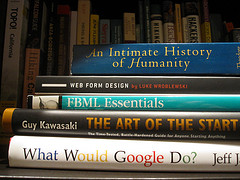
So this month, I’m going old school and reading physical books. Fortunately, Santa was good to me this Christmas, and my bookshelf is full. Here’s what’s up this month:

An Intimate History of Humanity by Theodore Zeldin. Published in 1994, this book looks at history from a humanistic perspective. Rather than look at history as a series of chronological events, Zeldin looks to history to discover “How some people have acquired an immunity to loneliness,” and “How respect has become more desirable that power.” Interesting premise.

Web Form Design – Filling in the Blanks by Luke Wroblewski is considered by many to be the definitive resource for usability of the all-important point of interaction between human and machine: the web form. Consider that I am using a web form to compose and submit this blog post. You may (hopefully) use the web form below to share a comment. We use web forms for email, discussion forums, chat rooms, documents, banking and shopping. They are — for now — the primary method of interaction on the web. And yet, so few websites do them well. I’m hoping to do my part to change that.

FBML Essentials by Jesse Stay is less of a read and more of a reference guide to FBML — the Facebook Markup Language. You may hear more about Facebook from me in the not-too-distant future.

Guy Kawasaki is a former Apple Fellow and noted entrepreneur and venture capitalist. His book The Art of the Start is a guide for anyone starting anything — whether that be a new product, service, company or club. Since I’m always starting up something, I figured it wouldn’t hurt to learn from a master.

What Would Google Do? is Jeff Jarvis’ treatise on how to do business in the Age of Google. The first few sentences from the book offer a telling glimpse at the premise: “It seems as if no company, executive, or institution truly understands how to survive and prosper in the internet age. Except Google. So, faced with most any challenge today, it makes sense to ask: WWGD? What would Google do?”

My book report will follow. First I have some reading to do!