Posted on 2 Comments

Countdown to Mount Shasta

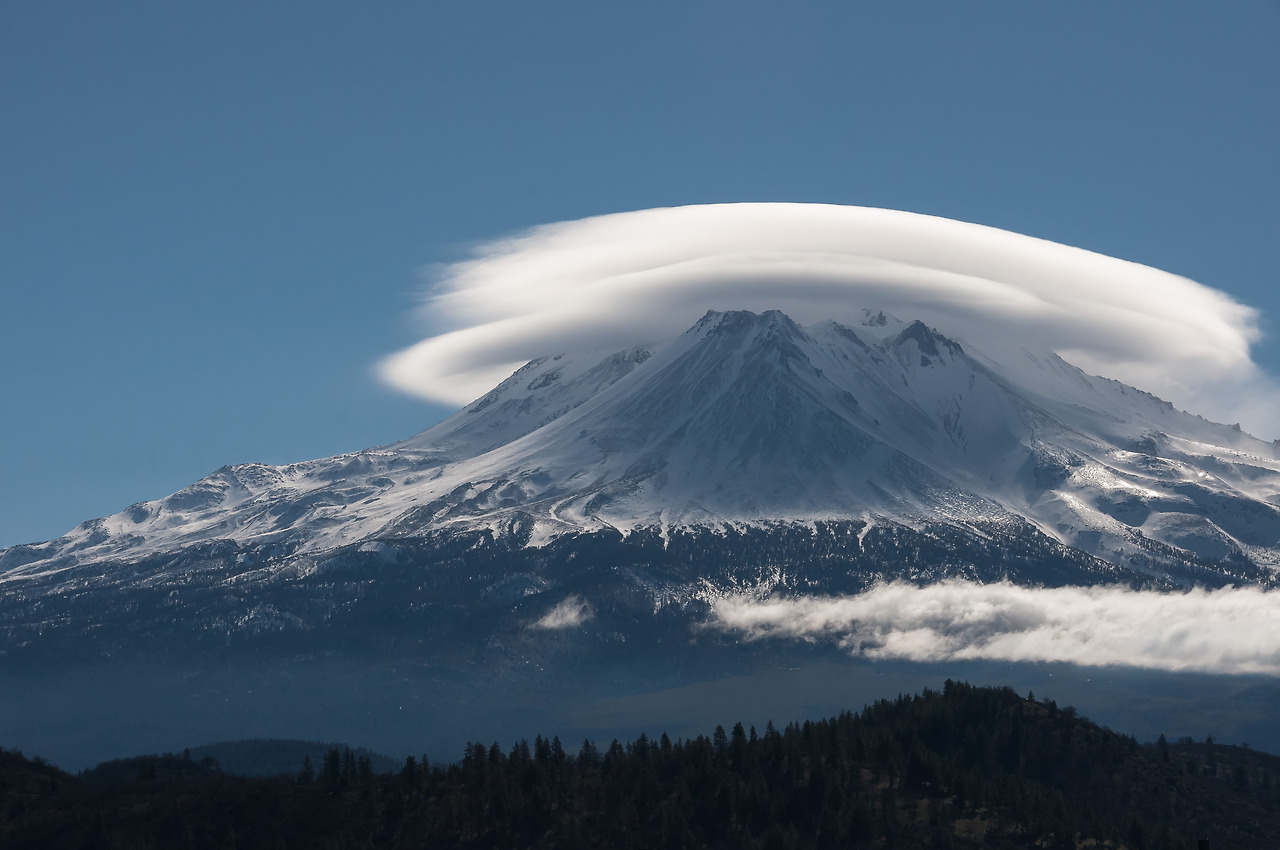
Mount Shasta

I like to set big goals. That’s partly the reason I originally created the Six-Pack of Peaks Challenge. Creating a goal, and developing a plan to achieve that goal helps keep me focused on the things that matter to me.

This year, one of my big goals is to climb Mount Shasta. At 14,179 feet above sea level it’s a considerable peak–the fifth highest in California and the second highest in the Cascades. Shasta is the 11th most prominent peak in the US. John Muir climbed it, and it’s home to seven named glaciers.

Most of the peaks I’ve summited were hike-ups, with the exception of Banner Peak. Hike-ups are mountains that have a trail nearly all the way to the summit. They don’t require any technical gear or skill, just the fitness and gear to survive the weather.

Mount Shasta in contrast, requires crampons, ice axe, helmet and self-arrest skills. The route we are taking goes up the rather ominously named Avalanche Gulch; the same route John Muir took over a century ago, and generally considered one of the easiest routes.


Avalanche Gulch may be easier, but it’s not easy. This route (there is no trail) climbs 7,000 vertical feet. If we’re lucky, we’ll have nice frozen snowpack to walk on top of. Which is why we’re hiking it over two days.

Day One, we climb to Helen Lake at 10,400 feet. It’s the typical “base camp” for climbers taking two or even three days to summit on this route.

On Day Two, we wake up at 2 or 3 am and climb by headlamp while the snow is frozen and firm–better conditions for avoiding rock and ice fall that can occur when the sun warms things up. If we can make good progress, we might even catch the sunrise. Then, we descend all the way back to the trailhead. It’s a descent of 7,000 feet, and a sure-fire bet that our legs will be toast by the end.

Our crew consists of outdoor friends I originally met online: Chris Sunnen (The Last Adventurer); Josh McNair and his wife Amy (California Through My Lens); Paulina Dao and her beau (Little Grunts); and John Soltys (Moosefish) – a great crew!

Training for Shasta

I’ve been hiking some longer hikes on the weekends, such as the NorCal Six-Pack of Peaks, and will continue to do so up until our Shasta trek. During workdays, I’m hitting Equinox with a focus on lower body, core strength and cardio. I love the Pursuit cycling classes at Equinox. They incorporate game play that exploits my competitive nature for better results. Two weeks ago I ran the Oakland Half Marathon with nearly zero running before hand; just cycling and hiking, and turned in my best time since 2012.

I’m running the Grand Teton Half Marathon at the beginning of June, and climbing Mount Baldy for the Climb for Heroes the day after that. These should either break me or harden my body, and it will definitely help prepare me for higher elevations. From that weekend, I have just two weeks until Shasta, so I’ll begin to taper off.

I’m feeling the stoke.

And I’m climbing Mount Shasta in…

Day Hour Minute Second

Postscript

The trek up Mount Shasta was a success! Read all about it and see the photos.

Photo credit: Ruben Garcia

Posted on 2 Comments

Why I Ran the LA Marathon

Jeff at the LA Marathon finish _Snapseed

On St. Patrick’s Day, March 17th, 2013, I completed the LA Marathon–my second marathon, and the first in over five years. Though my official time was a modest 5:28:44, my previous time was just over 6 hours. Running a marathon requires a huge commitment of time and energy — two resources that are finite and precious. The training can be tedious and painful, and the race itself strained my 50-year-old body.

So why did I run the LA Marathon? Let me begin with a little background.

I started running back in 1976. I was in ninth grade, and I joined the cross-country team at Center Grove High School in Greenwood, Indiana. When the cross-country season ended in November, we’d start the “Roadrunners Club” to keep up our endurance for the spring track season. We’d tally our miles accumulated through the winter, and the coach awarded us with a red t-shirt with the cartoon Roadrunner on the front, and our mileage ironed-on the back. We didn’t call it gamification back then, but that was the general idea.

I continued running when my family moved to Irvine. I didn’t break any records, except occasionally my own. I wasn’t the fastest, and not the slowest. But I showed up, and I ran, even though I never really considered myself a runner. I’ve heard it said that “a jogger runs, but a runner jogs.” Clearly, I was a jogger.

I’ve run on-and-off through the years, though not consistently. But in 2007, I decided to run my first marathon. I trained with Team in Training, raising over $2000 for the Leukemia and Lymphoma Society. A month before the marathon, I came home from a one week vacation with a bug that turned into walking pneumonia. I was in bed for one solid week, and missed my longest training run. But the training still paid off, and I completed the San Diego Rock-and-Roll Marathon. As in high school, I wasn’t the fastest (not by a long shot) but I wasn’t the slowest, either.

After that first marathon, I turned my interest to other physical activities, first mountain biking, and then (after breaking my wrist on the San Juan trail) hiking. I set my sights on a new goal: through-hiking the John Muir Trail, 30 years from when I first hiked it at 18. This epic backpacking trip required months of planning, training and preparation. And in the process, SoCal Hiker was born. I focused all available time and energy on training for hiking long miles on the trail at high elevations, carrying everything I need on my back. There is a time for everything, and this was not the time for running.

Last year I decided it was the time for running once again, and I began training for the La Jolla Half Marathon. This is a beautiful course, running along the coast from Del Mar to La Jolla Cove. I followed the Jeff Galloway run-walk method, and finished with a time that I was happy with (2:20, and my personal best). I thought about maybe running a marathon again, someday. But not until October 2012 did I commit to running this year’s LA Marathon. I blame my friend Jeff Turner for lighting the fire under me.

This time, I followed Jeff Gaudette’s beginner marathon training plan through RunKeeper… mostly. I started training in November, and logged 369.7 miles and over 80 hours of running. A few snafus kept me from completing all the runs I had scheduled, including travel with 18 days in Mumbai and a brief bout with the flu. But I kept plugging away, and on March 17th, I was proudly among the 25,000 runners wreaking havoc with LA street traffic. I finished in 5 hours, 28 minutes — improving my 2007 marathon time by more than 30 minutes.

Why I Ran the LA Marathon

As you see, it’s been a long journey to get there, with a lot of sweat, blood and probably a few proverbial tears as well. Was it worth it? Why did I subject my fifty-year-old body to such a demanding task? What’s the ROI?

I ran this marathon for LA. My wife and I moved to Los Angeles last year, and are loving it. This marathon was my tribute to a wonderful city, and the route itself takes you on a grand tour of that city– from Dodger Stadium to Chinatown, through the soaring skyscrapers of downtown LA and the gleaming Walt Disney Concert Hall, through the heart of Hollywood, past the Chinese Theater, the Walk of Stars; down the Sunset Strip, Rodeo Drive, and stretching out to the beautiful bluff overlooking the Pacific Ocean in Santa Monica. It’s a terrific route, and the crowds lining the streets, cheering, passing out orange slices or water, and sharing high-fives made it even better.

I ran this marathon for me. Because I still can. Because I have the persistence to stick to the training, and the determination to reach the finish line. Because it makes me stronger.

Most of all, I ran this marathon for the ones I love. I ran for my wife, who inspires me to do more, and cheers me on. I ran for my children and my grand-children, to inspire them as well. To demonstrate that my “old man powers” (thanks, Dan) can do pretty amazing things. And to show them that if I can do it, they can do amazing things, too! 

There are life lessons in training for and running a marathon. Like so many things in life that we aspire to, it requires planning, hard work and preparation. Obstacles will arise, and you may have to adjust and adapt. Set big, bold goals. Do the hard work, and cross that finish line. That lesson is worth retelling– to myself, my family and my friends. And that is why I ran the LA Marathon.

What is your marathon? Are you ready? 


Posted on 4 Comments

Planning, Goals and Success

“There’s no difference between a pessimist who says, “Oh it’s hopeless, so don’t bother doing anything.” and an optimist who says, “Don’t bother doing anything, it’s going to turn out fine anyways. Either way, nothing happens.” – Yvon Chouinard, rock climber, environmentalist and founder of Patagonia

“Failures don’t plan to fail; they fail to plan.” Harvey MacKay

“A goal without a plan is just a wish.” Antoine de Saint-Exupery

These quotes share a common thread and illuminate a problem that is far too common. I see it in companies struggling to implement knowledge management. I see it in communities of practice. You can find it in businesses, organizations, clubs, and even the personal lives of people we care about.

The problem? The absence of a plan.

Historically — and with comic certainty — the gyms overflow in January as we collectively resolve to shed those holiday pounds and get healthy. By the end of the month, the crowd subsides and it’s back to business as usual. What happens? Do people decide that they really don’t want to lose the weight they tacked on? Do they discover that their health really isn’t that important to them? No, the problem is that they have a goal in mind (i.e. lose weight), but only a vague idea of how to get there. What they lack is a plan.

Goals are good and necessary. Goals give us something to strive for, and achieving our goals — be they personal or professional — are largely how we measure success. To get from where you are to where you want to be, you need two things: a goal that is well-defined and measurable, and a plan that — if followed — will help you reach that goal.

The Power of Planning: A Personal Illustration

For years, I had a long-standing goal to hike the John Muir Trail for a second time (the first time being in 1980). This is an arduous undertaking requiring tremendous amounts of planning, preparation and training. I had my goal: hike the entire 211-mile trail, three decades after my first epic journey on the JMT. My goal was well-defined and measurable. And I created a plan that would help me reach my goal.

My plan required coordination my schedule with work; recruiting others to join me on the epic backpacking trip; training my body and getting in shape (I lost 40 lbs. in the process); creating a day-by-day itinerary; planning the meals; getting permits; coordinating transportation, and so on. It was not easy. But it was worthwhile, because it helped me succeed at achieving this longtime goal. In August 2010, 30 years from my first JMT trek, I completed the John Muir Trail for a second time.

Whether personal, professional or business goals, the key is to define your goals, write them down, and create a plan that will help you get there.

A Challenge to You

Here’s my challenge to you. Think of three goals you would like to achieve, either personally, professionally or for your  business or organization. You might want to travel to Paris, launch a new initiative at work or go back to school. Whatever the goals, write them down, making sure they are well-defined. They should stretch you or your organization beyond what you know you can easily handle. Then sort out what it will take the achieve those goals. These steps must be something that you have control over, so if you’re counting on winning the lottery, think again. Write these steps down. This is your plan. Follow it, and you can reach your goals successfully.

What goals do you have for 2011 or beyond? Have you create a plan? I’d love to hear them.

Oh and by the way, one of my recruits for my 2010 JMT trek is now my sweetheart. Sometimes success brings unexpected rewards!