Posted on Leave a comment

Training for Mount Kilimanjaro

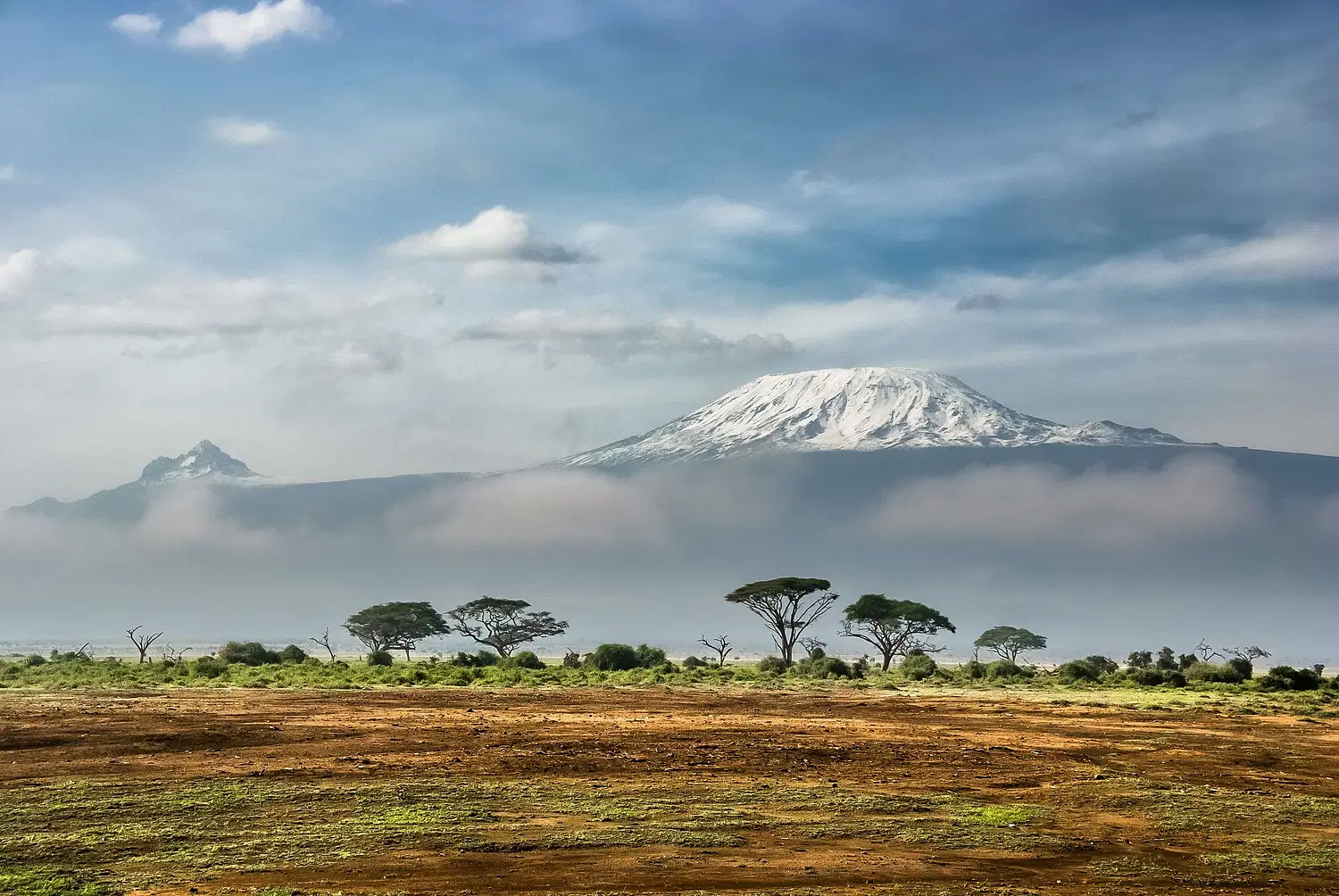
In January 2026, I’ll be climbing Mount Kilimanjaro in Tanzania. I’m organizing a group of intrepid adventurers from the Social Hikers community for to climb this mountain via the Machame or “Whiskey” Route. And as of June 18th, we have room for additional group members. Join me!

At 19,341 feet above sea level, Kilimanjaro is the highest peak on the continent of Africa, making it one of the Seven Summits. It’s also 4,836 feet higher than the tallest peak I’ve hiked to date, Mount Whitney.

There are a number of factors that make this challenging. The weather can be wet, cold, snowy and windy. I don’t mind cold — I’ve experienced that on Mount Rainier — but I’d be very pleased if it didn’t rain on us.

The elevation is the big wildcard. I’ll be talking to my physician about a prescription for Diamox to help prevent altitude sickness, and I’ll be summiting at least four 14ers this year to see how my body responds at higher elevations. It’s been seven years since I last summited a 14er.

Then there is the hiking itself. I’ve estimated the daily milage and the gross elevation gain (and loss) each day, and the actual mileage is not bad. The gross elevation gain is non-trivial, but nothing I haven’t done before. Just not at 19,000 feet.

The table below shows the approximate mileage each day as well as the gross elevation gain. As you see, our mileage each day never goes over 10 miles, and our elevation gain does not exceed 4000 feet.

DayItineraryMileageElev. Gain (ft)Energy Miles
1Base to Machame Camp7395114.9
2Machame to Shira Camp328498.7
3Shira to Barranco Camp6268711.4
4Barranco to Karanga Camp314045.8
5Karanga to Barafu Camp220966.2
6Barafu to Summit to Mweka Camp9.753993/(9200)17.7
7Mweka to Base5(4718)5
TOTALS35.7516,98069.7

What are Energy Miles?

What you might not be familiar with is the last column, labeled Energy Miles. In 1976 Paul Petzoldt the founder of the National Outdoor Leadership School (NOLS) created a formula for hikers to calculate their energy needs. The formula estimates “energy mile” units. One “Energy Mile” is the energy required to walk one mile on flat terrain. The formula adds two more “energy miles” for every 1000 feet of elevation gain.

Using this formula, the energy miles approximates the effort of walking a level route. So the first day’s 7 miles and 3951 vertical gain would roughly equate to hiking 14.9 miles on a flat trail.

This does not account for the increased difficulty (or more accurately, the diminished efficiency) of hiking at higher elevations where there is less oxygen available. But it does provide a way of normalizing the daily mileage numbers into something a little more realistic.

My Kilimanjaro Training Plan

In my experience, the best training for hiking is… hiking. The reality is that it’s not always practical to devote 6-8 hours hiking several times a week. And so, my training incorporates three key components:

  1. Hiking and Backpacking – I’m aiming to do at least one long hike each weekend, as well as back-to-back day hikes and backpacking.
  2. Cardiovascular Fitness – My go-to for this is a 45 to 60 minute ride on my Peloton 3-4 times each week.
  3. Strength Training – Legs, core, back and shoulders 2-3 times each week.

My workouts are logged on Strava, so feel free to follow along.

Because my climb is in January, most of the higher mountains here in Central Oregon will be covered in snow from November onward, so it will require some creativity to get those long hikes with vertical gain in, and probably more snow hikes up Black Butte.

Have you climbed Kilimanjaro? Any tips to share for training? Is Kili on your bucket list? Leave a comment and let me know.

Posted on Leave a comment

The Teton Crest Trail: Will the Second Time Be a Charm?

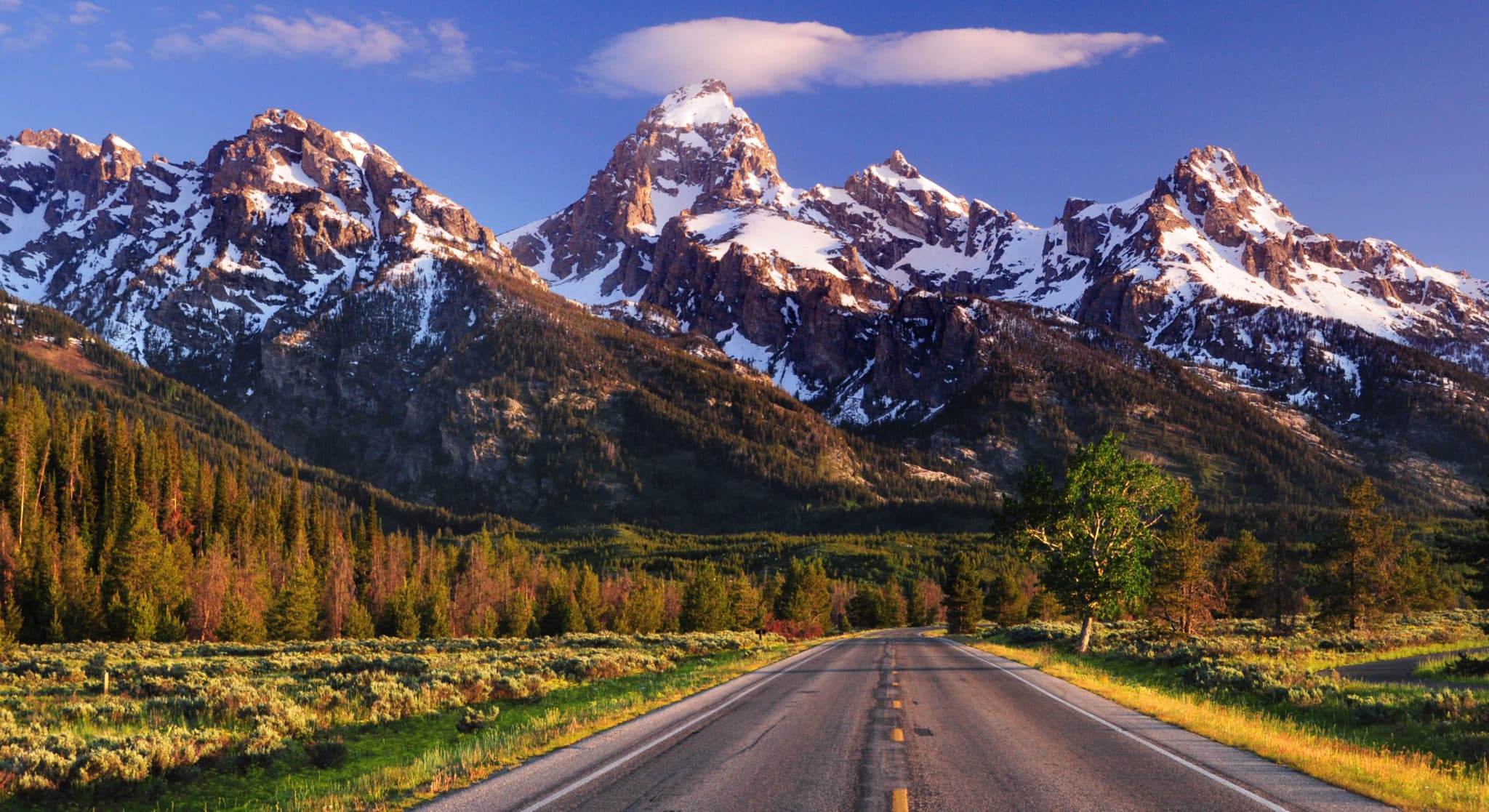
Grand Teton National Park

Five years ago in October of 2016, I flew from Seoul, South Korea (where I lived for a year) to Salt Lake City. From there I rented a car and drove to Jackson, Wyoming where I was speaking at a conference. I got there a few days early, planning to meetup with another thru-hiker traveling from Germany. Our goal? To hike the Teton Crest Trail in three days.

That attempt was thwarted by an early snow storm that meant winter mountaineering. We weren’t equipped for that, and because it was shoulder season, the gear wasn’t available to rent or purchase. We hiked up Granite Canyon to an elevation of about 9,000 feet when it because obvious we needed a new plan.

So we camped on the snow for the night, and in the morning made our way back down to the valley trail which skirts the eastern flank of the range. It was still a pretty spectacular trip.

This year, I’m finally getting another crack at the Teton Crest Trail, and it’s coming up soon.

Countdown to the Teton Crest Trail

Day Hour Minute Second

I’ll be posting details of the planning and the full trip report over at SoCalHiker.net if you’d like to follow along.

Posted on 1 Comment

Preparing to Bikepack The Big Lonely

My Bikepacking Rig

Many people know that I’ve done a bit of hiking and backpacking through the years. I’ve thru-hiked the John Muir Trail not once but twice. I’ve bagged peaks across the western US (and even a few in South Korea). I founded the Six-Pack of Peaks Challenge series.

You might not know that I’ve done some mountain biking. In fact, mountain biking led me (indirectly) to starting up SoCalHiker.net and planning that second thru-hike on the JMT. I living in south Orange County and mountain biking 2-3 times a week. One one shuttle ride down the San Juan Trail off Ortega Highway, I misread a simple drop and went over the bars, fracturing my left wrist in two places. I couldn’t ride for 3-4 months, so I focused on hiking.

Fast forward another ten years. My friend Ben and I were talking about bikepacking the Deschutes Tier of the Oregon Timber Trail, a bikepacking route that wanders from the California border all the way through Oregon to the Washington border. We just wanted to do one of the tiers, and yet, on the first day out I went over the bars again, this time creating a “non-displaced fracture” to one of my ribs.

Let’s just say my mountain biking and bikepacking experience hasn’t been as successful as my hiking and backpacking adventures.

I believe in the power of setting big gnarly goals. They help stretch you and give you something to grow for. One such goal for me is to complete The Big Lonely — a 350+ mile, self-supported bikepacking race in Central Oregon that helps raise funds for the Adventure Access Fund.

Last year’s race there were 12 entrants, and only half of them completed the route. In my mind, a “win” will mean completing the route without breaking a bone or my bike.

My goal is to complete it over five days, not a pace to win a spot on any podium, but maybe within the realm of possibility.

I’m still primarily a hiker and backpacker, so this endeavor is reminding me what it’s like to be a total noob. It’s humbling.

If you have any words of wisdom, I’ll all ears.

Countdown to The Big Lonely

Day Hour Minute Second
Posted on 1 Comment

10 Albums That Made an Impact

You’ve seen the challenge. It goes like this:

The rules: In no particular order, choose 10 albums, one per day, which made an impact (at some point in your life) on you. Post cover, no explanation, and nominate someone each day to do the challenge.

My friend Jason tagged me, and the result is this blog post.

I’m nominating you, since you’re reading this.

Post your list in the comments.

Posted on 1 Comment

20,501 Days Down, 14,152 Days to Go

The sun rising over Earth

We tend to think of our lives in terms of the number of trips we’ve made around the sun. By that count, I’m on my 57th trip as I write this. Although time seems to fly by faster as we grow older, years are still rather abstract. The years of a way of sneaking up on us that isn’t apparent until it’s too late.

On the other hand, days are very real and concrete. They count the here and now with relentless regularity. Sunrise. Sunset. Another day, another dollar. What day of the week is it? How many days until the weekend? What day is that hike on?  And yet, we often fritter away days as if they will go on forever.

What if we measured our lives by days rather than years? Does it add a sense of urgency? 

Malcolm Gladwell suggested in Outliers that it 10,000 hours of deliberate practice to become an expert. If you practiced four hours every day, seven days a week it would take 2,500 days to achieve expert status, or roughly seven years. Days (and hours) matter.

As for me, my 10,000th day fell on August 15, 1989. I was 27 years young. I had three kids and was trying my best to win at adulting.

My 20,000th day fell on New Years Eve, 2016. I was 54 years young, happily remarried four years earlier, celebrating 25 years of service with a single employer and getting ready to move to Seoul, South Korea.

My 30,000th day falls on May 18, 2044. I will be 82 years young. I’ve got lots on my life-list to accomplish between now and then, including writing a guide book for the Theodore Solomons Trail, relocating full-time to Bend, inspiring thousands of people to get outdoors more, and thru-hiking the Pacific Crest Trail.

Where are does this all lead?

According to actuary tables I should live 94.94 years, or 34,653 days. If the actuaries are accurate, I’ll give up my last breath on Monday, February 12, 2057.

20,502 days down. 14,151 days to go.

And because I need a reminder from time to time, I’ve got

Day Hour Minute Second

left to get shit done.

What are you going to do with your days? 

Posted on Leave a comment

Running Half Marathons (for People Who Hate Running)

Running half marathons for people who hate running

I ran my first half marathon as a teenager back in Indiana. It was sponsored by the local McDonalds, who fed us something they claimed were pancakes. Apparently in the 1970s, we didn’t get that carb-loading 30 minutes before race time wasn’t very effective. I don’t remember my time, but it took me a couple of decades before I ran my next half.

Since then, I’ve run two marathons and a number of half marathons. And yet, I’m not what most people would consider a runner. I don’t run regularly. If I don’t run for days, weeks, or even months, I don’t get an itchy desire to lace up my Hoka One Ones and head out. I’d much prefer to amble along a dirt trail, noticing the wind through the trees, the wildflowers reaching for the sun, and the wild turkeys pecking their way uphill.

And yet, at least once a year for the past four years, my buddy Jason and I have travelled to another National Park to run another half marathon. This year, it’s the Grand Teton Half Marathon in Jackson, Wyoming. And this year, instead of logging 5-9 miles a run four times a week to train, I’m not running at all.

I'll be running the Grand Teton Half Marathon
The view at the Grand Teton Half Marathon is going to ROCK!

My Non-Runner’s Training Routine

Three times a week, I take an indoor cycling class. Specifically a Pursuit class, where your metrics are projected onto a screen at the front of the classroom. The accountability and competition inspires a higher level of performance that makes every other cycling class seem boring by comparison. It only takes an hour, and since the Equinox gym I belong to is two floors down, I have zero excuses. Best of all, it’s fun. Unlike running, I actually do feel an “itch” to go to a Pursuit class when I’ve missed one due to travel or other commitments.

And then I hike, usually twice a week. Hiking, by necessity, takes longer. I have to travel to-and-from the trailhead, and traveling at even a brisk hiking pace, most hikes consume half a day or more.

In between, I fill in the gaps with strength training and yoga. I’ve been learning Iyengar yoga, which focuses on proper form and has been super helpful for flexibility and recovery.

How well will this non-running training program work? 

I tested this last month in the Oakland Half Marathon. I signed up on a whim, just a couple weeks before the event. I planned to use the Jeff Galloway method, running four minutes and walking one, repeating until finished. I ended up running straight through mile nine, then adding in some walking stretches. I finished with my best half marathon time since 2012. My time wasn’t my fastest ever, but it felt like validation that a non-running training regimen could work.

We will find out in…

Day
Hour
Minute
Second

Posted on 2 Comments

Countdown to Mount Shasta

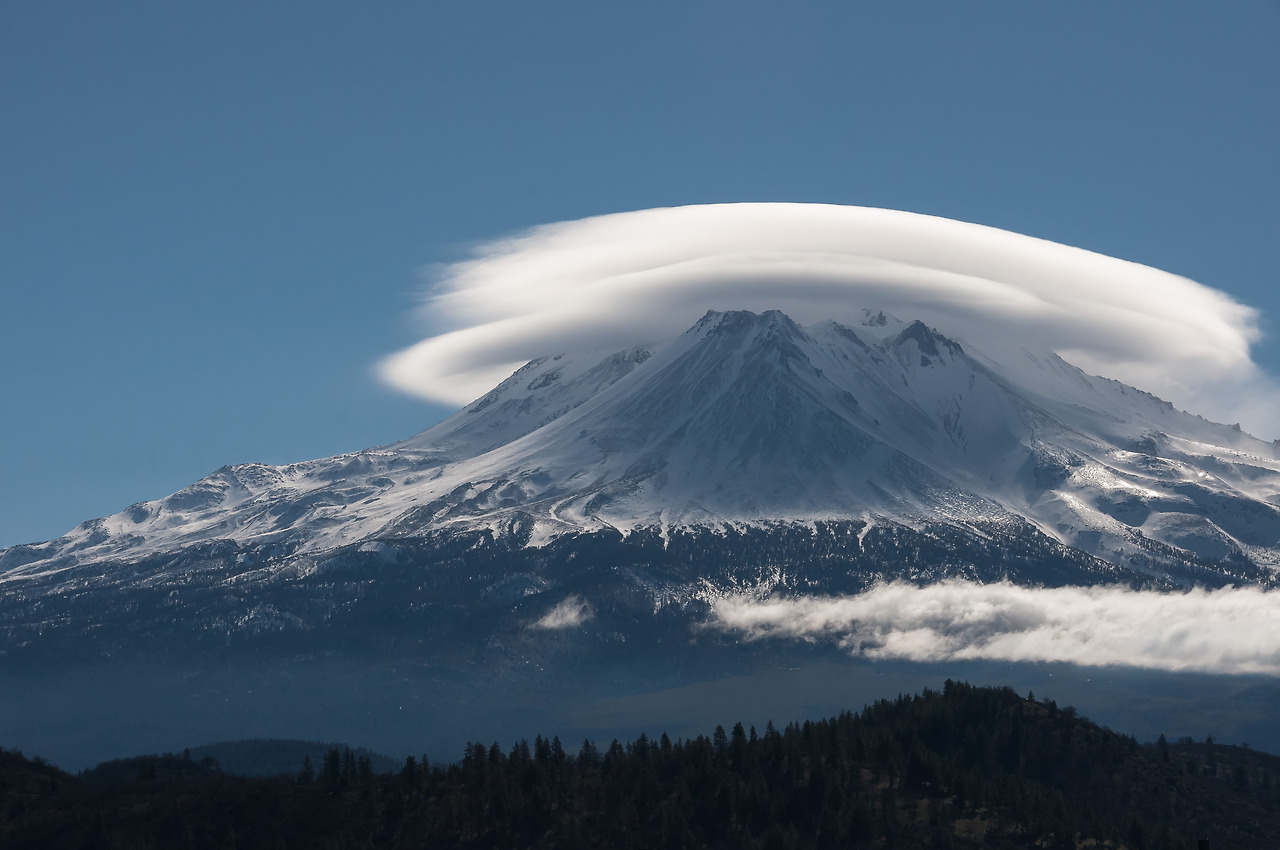
Mount Shasta

I like to set big goals. That’s partly the reason I originally created the Six-Pack of Peaks Challenge. Creating a goal, and developing a plan to achieve that goal helps keep me focused on the things that matter to me.

This year, one of my big goals is to climb Mount Shasta. At 14,179 feet above sea level it’s a considerable peak–the fifth highest in California and the second highest in the Cascades. Shasta is the 11th most prominent peak in the US. John Muir climbed it, and it’s home to seven named glaciers.

Most of the peaks I’ve summited were hike-ups, with the exception of Banner Peak. Hike-ups are mountains that have a trail nearly all the way to the summit. They don’t require any technical gear or skill, just the fitness and gear to survive the weather.

Mount Shasta in contrast, requires crampons, ice axe, helmet and self-arrest skills. The route we are taking goes up the rather ominously named Avalanche Gulch; the same route John Muir took over a century ago, and generally considered one of the easiest routes.


Avalanche Gulch may be easier, but it’s not easy. This route (there is no trail) climbs 7,000 vertical feet. If we’re lucky, we’ll have nice frozen snowpack to walk on top of. Which is why we’re hiking it over two days.

Day One, we climb to Helen Lake at 10,400 feet. It’s the typical “base camp” for climbers taking two or even three days to summit on this route.

On Day Two, we wake up at 2 or 3 am and climb by headlamp while the snow is frozen and firm–better conditions for avoiding rock and ice fall that can occur when the sun warms things up. If we can make good progress, we might even catch the sunrise. Then, we descend all the way back to the trailhead. It’s a descent of 7,000 feet, and a sure-fire bet that our legs will be toast by the end.

Our crew consists of outdoor friends I originally met online: Chris Sunnen (The Last Adventurer); Josh McNair and his wife Amy (California Through My Lens); Paulina Dao and her beau (Little Grunts); and John Soltys (Moosefish) – a great crew!

Training for Shasta

I’ve been hiking some longer hikes on the weekends, such as the NorCal Six-Pack of Peaks, and will continue to do so up until our Shasta trek. During workdays, I’m hitting Equinox with a focus on lower body, core strength and cardio. I love the Pursuit cycling classes at Equinox. They incorporate game play that exploits my competitive nature for better results. Two weeks ago I ran the Oakland Half Marathon with nearly zero running before hand; just cycling and hiking, and turned in my best time since 2012.

I’m running the Grand Teton Half Marathon at the beginning of June, and climbing Mount Baldy for the Climb for Heroes the day after that. These should either break me or harden my body, and it will definitely help prepare me for higher elevations. From that weekend, I have just two weeks until Shasta, so I’ll begin to taper off.

I’m feeling the stoke.

And I’m climbing Mount Shasta in…

Day Hour Minute Second

Postscript

The trek up Mount Shasta was a success! Read all about it and see the photos.

Photo credit: Ruben Garcia